Liszt's worldview was shaped by the interplay of the restless nature of Faust and the cynical skepticism of Mephistopheles, leading him to revisit these characters throughout his life.
Compositional Technique
The second Mephisto Waltz, dedicated to Camille Saint-Saëns, begins and ends with the harsh sound of the tritone interval, known as 'Diabolus in musica'.
Instruments
The recording of this album was made on Richard Wagner's piano, an instrument that Franz Liszt himself had played.
Composer's Artistic Vision
Franz Liszt, the composer of the original Mephisto Waltzes, believed his contemporaries would not understand his music, stating, 'The time will come when my works will be recognized. But when that happens, it will be too late - I will no longer be alive.'
Interpretation
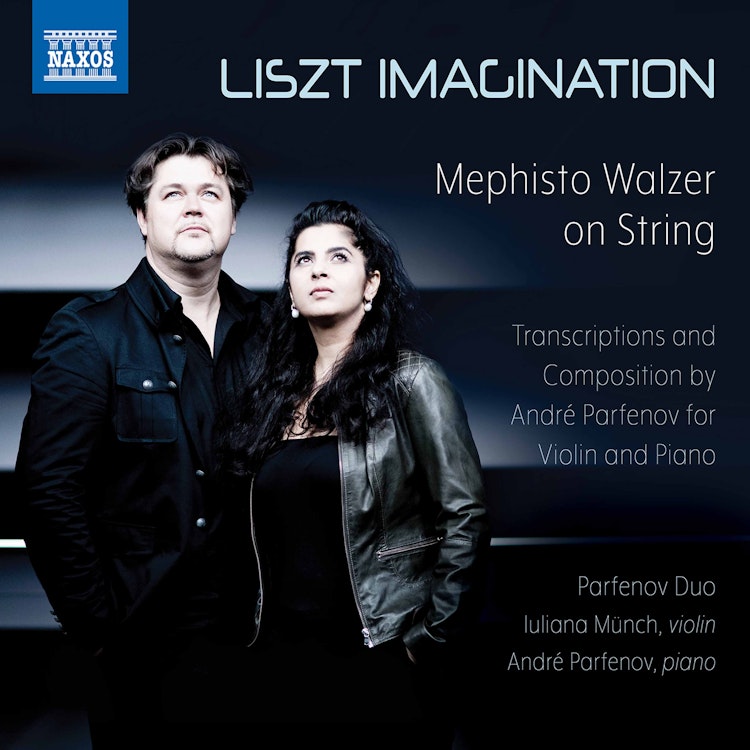
André Parfenov's arrangements for violin and piano aim to preserve the spirit of Liszt's works while adapting them to the violin's unique timbre and technical possibilities, often expanding passages and cadenzas.
Recording & Production
This album's recording began in June 2020 at Villa Wahnfried in Bayreuth, the former home of Richard Wagner, and concluded at the Steinway Galerie Münster.
Composition History
The inspiration for Liszt's first Mephisto Waltz came from a scene in Nikolaus Lenau's 'Faust', not Goethe's famous drama, where Mephisto plays a wild dance on a violin.
You might also enjoy...
Johann Sebastian Bach: Six Sonatas For Violin And Piano