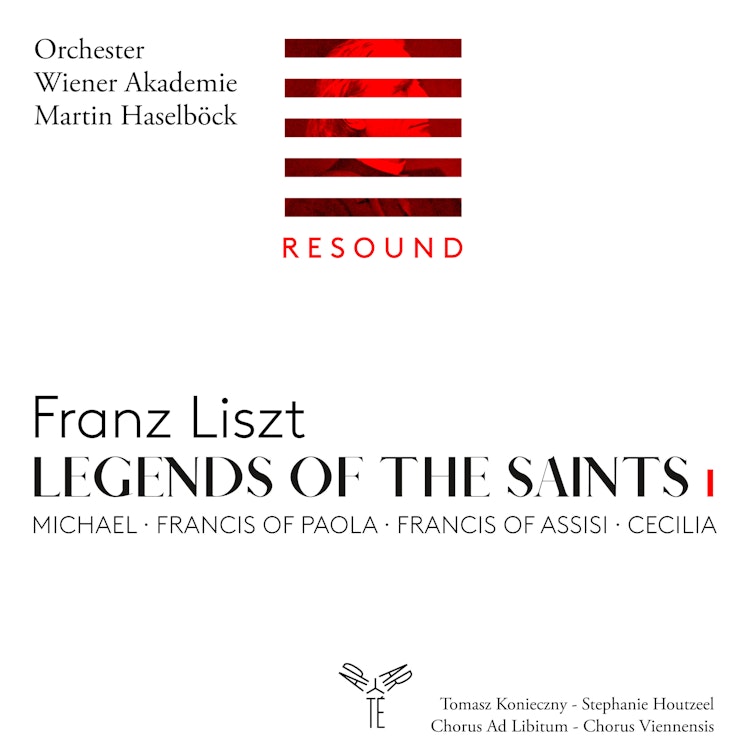
The cantata Die Glocken des Strassburger Münster, dating from 1874, is based on texts by American writer Henry Wadsworth Longfellow, including his poem 'Excelsior!' and the prologue to 'The Golden Legend'.
Composer's Artistic Vision
For his saint-related works, Liszt drew poetic inspiration from pictorial representations, traditional hagiographies, and prose or poetry, especially from 19th-century Romantic literature.
Composer Biography
Liszt had a strong connection to the Franciscan Order; his father, Adam, was a member for a time, and Liszt himself joined as a lay member in the late 1850s.
Composer's Artistic Vision
Franz Liszt's sacred works frequently refer to specific saints, driven by his deep Catholic faith and a conviction that music should contribute to Christian social cohesion.
Composer's Artistic Vision
Liszt considered the motto 'Excelsior'—the constant striving for something higher—to represent the noble goal of poetry and music, as he shared with fellow artist Henry Wadsworth Longfellow.
Compositional Technique
The opening of Liszt's Preludio to Die Glocken des Strassburger Münster features a four-note melodic phrase that Richard Wagner later adopted as the 'love feast' motif in his opera Parsifal.
Compositional Technique
Liszt's vocal works range from small sacred songs to large cantatas and sketches for full oratorios, while his instrumental pieces span from poetic character pieces to impressive orchestral works.
You might also enjoy...
Reger: Works for Voice & Organ
A Winter's Night
Adeste Fideles: Christmas Music From Around the World