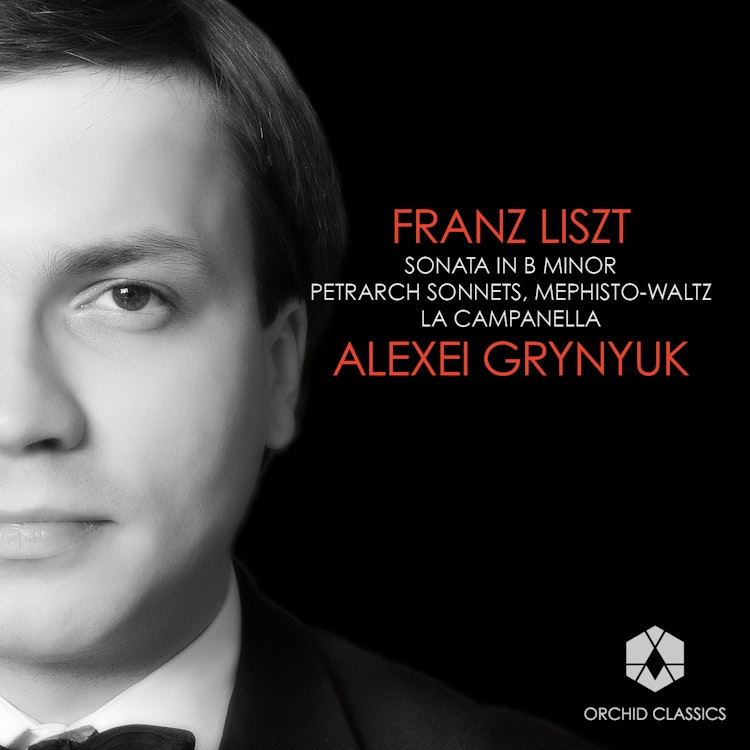
Liszt: Piano Sonata in B minor - Mephisto Waltz No. 1
6/4/2013, 10 Tracks, 1:07:52
Featuring
Alexei Grynyuk
Franz Liszt
Did you know?
1/7
Composition History
The three Petrarch Sonnets were originally conceived as songs and later transcribed for piano, reflecting Liszt's deep appreciation for Italian art, literature, and opera.
Compositional Technique
Liszt was a master of piano transcription, able to transform music into entirely new pieces by reinventing their color, palette, and texture to sound inherently pianistic.
Performer Biography
Pianist Alexei Grynyuk, born in Kiev, began performing public concerts at age six and won the Sergei Diaghilev All-Soviet-Union piano competition at thirteen.
Compositional Technique
Liszt championed thematic transformation, where related motives undergo striking character changes to follow the drama, as seen in his Sonata in B minor.
Composer Biography
Franz Liszt is often considered the greatest pianist of all time, having revolutionized piano playing and placed the instrument at the center of Romantic artistry.
Composer's Artistic Vision
Liszt aimed to create a continuous emotional journey for his audience, combining the drama of opera with the beauty and philosophical depth of a poem.
Composition History
The Mephisto-Waltz No.1, which also has an orchestral version, is based on an episode from Nikolaus Lenau's version of the Faust legend, titled 'Der Tanz in der Dorfschenke' (The Dance in the Village Inn).
You might also enjoy...
A Romantic Christmas: Piano Music By Tchaikovsky, Liszt, Grainger And Bach
Busoni: Piano Works
Wagner & Liszt & Rossini: Salon chromatique et harmonique
Wagner & Liszt & Rossini: Salon chromatique et harmonique