Living Concert Series – Schoenberg & Fauré: Pelleas & Melisande
10/1/2013, 21 Tracks, 58:42
Featuring
Jonathan Darlington
Duisburger Philharmoniker
Arnold Schoenberg
Gabriel Fauré
Did you know?
1/7
Compositional Technique
Arnold Schönberg's symphonic poem 'Pelleas und Melisande' is a single-movement work that subliminally presents the four movements of a symphony, using a strict architectural plan.
Recording & Production
This album is part of the 'LIVING CONCERT SERIES', which aims to provide an emotionally intense concert experience by combining live performance spontaneity with refined recording techniques.
Composer Biography
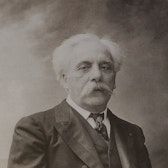
Gabriel Fauré, despite his success with the 'Pelléas et Mélisande' incidental music, worked for nearly forty years as a church musician and primarily wrote songs and chamber music.
Composition History
Richard Strauss, a German composer known for his operas and tone poems, suggested the 'Pelléas et Mélisande' story to Arnold Schönberg as a basis for an opera.
Historical Context
Maurice Maeterlinck's drama 'Pelléas et Mélisande' is a symbolist work that consciously turns away from positivism and naturalism, emphasizing the mysterious in the world and soul.
Compositional Technique
In his 'Pelleas und Melisande', Arnold Schönberg began exploring new harmonic territory, notably by using chords of fourths for the first time.
Composition History
Both Arnold Schönberg and Gabriel Fauré composed works titled 'Pelléas et Mélisande', inspired by Maurice Maeterlinck's symbolist drama.
You might also enjoy...
Rimsky-Korsakov: Scheherazade / Stravinsky: The Firebird Suite
Rimsky-Korsakov : Scheherazade & Tsar Saltan Suite