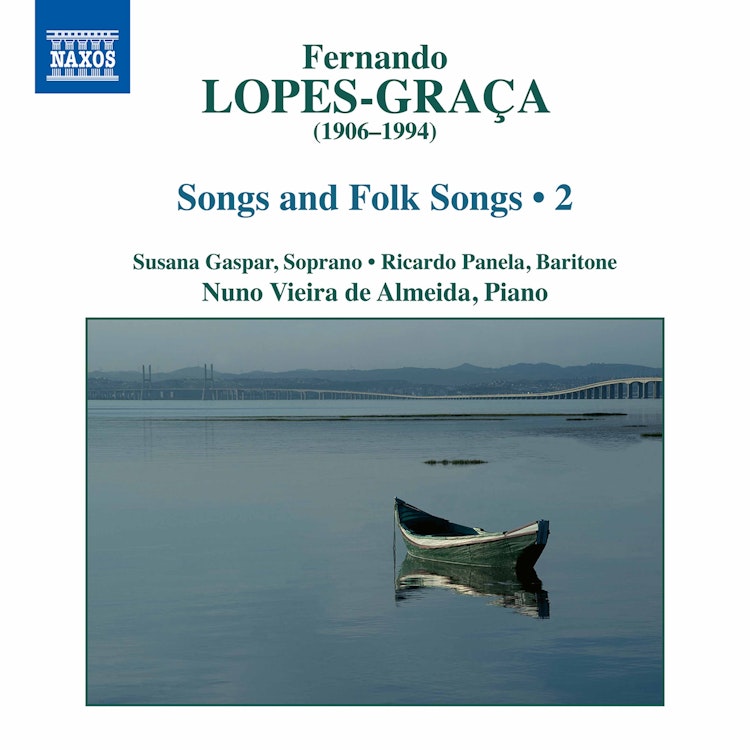
The 'Three Songs of 25 April' were composed in 1975 in the wake of the Carnation Revolution of the previous year, which ended the authoritarian regime in Portugal and restored democracy.
Composer's Artistic Vision
Lopes-Graça developed a utopian vision of universal peace and internationalist fraternity through folk song, believing in the composer's mission as a mediator between cultures.
Composer Biography
Lopes-Graça was a member of the Portuguese Communist Party, which made him persona non grata with the authoritarian regime of António de Oliveira Salazar and largely prevented the dissemination of his music through state institutions for decades.
Performer Biography
Susana Gaspar, a Portuguese soprano, was a member of the Jette Parker Young Artists Programme at the Royal Opera House, Covent Garden, and represented Portugal in the 2013 BBC Cardiff Singer of the World competition.
Composer Biography
Fernando Lopes-Graça, one of the most prominent Portuguese composers of his generation, settled in Coimbra where he came into contact with a group of writers and intellectuals active around the journal Presença, an important modernist publication.
Recording & Production
Several pieces on this album, including 'Ícaro', 'Marcha quase fúnebre', 'Três canções do 25 de Abril', and 'Dix Chansons populaires tchèques et slovaques', are world premiere recordings.
Compositional Technique
Lopes-Graça advocated for the free use of modern harmonic resources in folk song arrangements, including quartal and quintal harmonies, distant key imitations, and the enhancement of modal coloring.