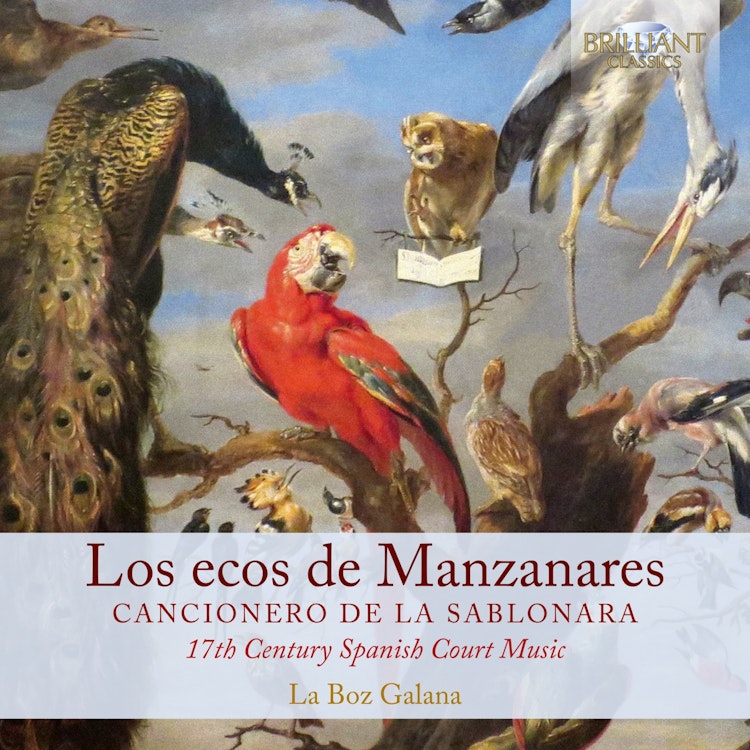
Los ecos de Manzanares: Cancionero de la sablonara
1/31/2020, 16 Tracks, 1:00:31
Featuring
La Boz Galana
Gabriel Díaz Bessón
Diego Gómes
Álvaro de los Ríos
Anonymous
Mateo Romero
Juan Blas de Castro
Bernardo Clavijo del Castillo
Miguel de Arizo
Manuel Rodrigues Coelho
Joan Pujol
Did you know?
1/7
Compositional Technique
The music on this recording represents a transition from Renaissance polyphony to the new Baroque style, featuring both elaborate contrapuntal pieces and homophonic compositions with lively rhythms and dance patterns.
Cultural Impact
The Cancionero de la Sablonara is a valuable source of music from early 17th-century Spain, which gave birth to the 'tono humano' — a characteristic poetic-musical genre that endured into the 18th century.
Composer's Artistic Vision
Many of the texts used in these songs were written by distinguished poets of Spain's Golden Age, such as Lope de Vega, Luis de Góngora, and Francisco de Quevedo.
Historical Context
The manuscript is named after Claudio de la Sablonara, copyist and archivist of Madrid's Royal Chapel, who presented it to Wolfgang Wilhelm, Count of Nuremberg and Duke of Bavaria, between 1624 and 1625.
Historical Context
The Cancionero de la Sablonara survived the devastating fire of 1734 that destroyed hundreds of musical works at the Real Alcázar of Madrid because it was abroad at the time.
Performer Biography
La Boz Galana, the ensemble performing on this album, was created in 2011 in Basel, Switzerland, by singers and instrumentalists from Colombia, Brazil, and France.
Composition History
The Cancionero de la Sablonara is a collection of 75 polyphonic songs composed for the Royal Court of Madrid during the first two decades of the 17th century.
You might also enjoy...
Cypriot Vespers
Buxtehude: Cantatas & Sonatas
Bodinus, S.: Trio Sonatas Nos. 1-6 From Musikalischen Divertissements, Part Iv
Grand Tour a Venezia
Duarte, Bull, Ferrabosco & Others: Chamber Works
Schickhardt: VI Concerts Á 4 Flutes Et Basse Continue
Vivaldi: Vespers of Sorrow
Le Prince: Missa Macula non est in te
Chamber Music (Baroque) - Falconieri, A. / Merula, T. / Cabanilles, J. / Storace, B. / Castello, D. / Marais, M. (Folias Festivals)
Mudge, R.: 6 Concertos A 7 (Capriccio Baroque Orchestra)
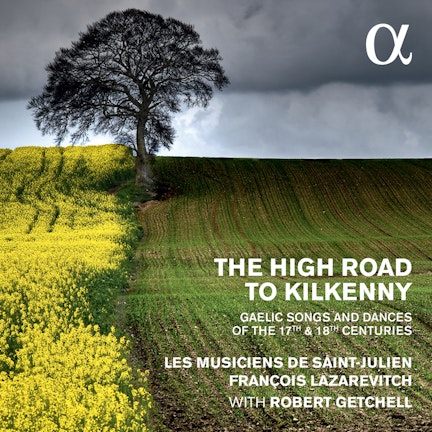
The High Road to Kilkenny: Gaelic Songs and Dances of the 17th & 18th Centuries