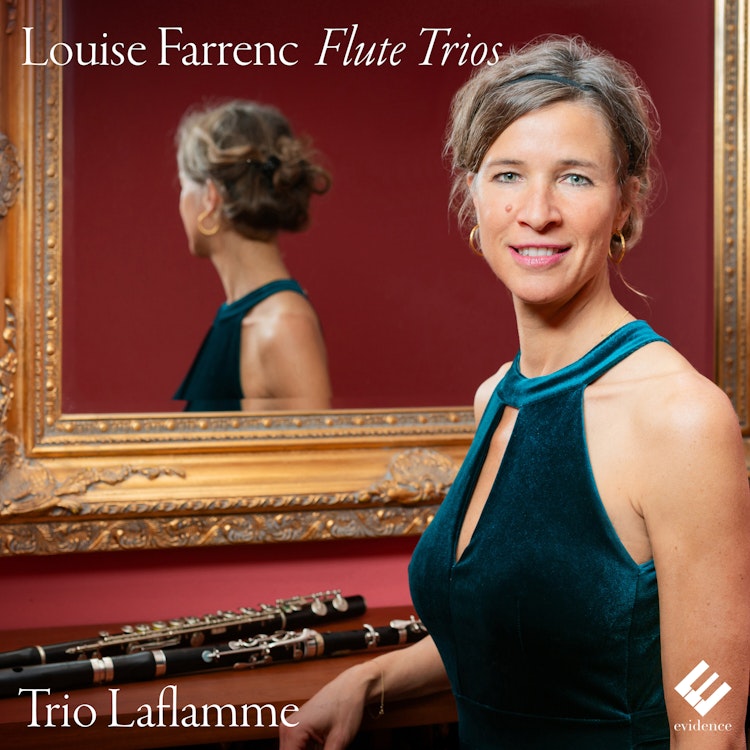
This recording features two different historical flutes and two different historical pianos, showcasing the evolution of these instruments in the 19th century.
Composer Biography
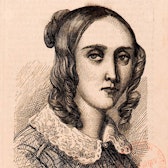
Louise Farrenc (1804-1875) was born into a family of artists in Paris and began piano and music theory at age six.
Composition History
In the 1840s, Louise Farrenc aimed to popularize chamber music in Paris, a genre then dominated by opera and virtuoso soloists, and largely associated with German music.
Instruments
The first trio is played on a conical flute with eight keys, designed according to the 'old system', while the second features a cylindrical flute with the 'new Boehm mechanism'.
Critical Reception
Louise Farrenc was twice awarded the Prix Chartier (1861 and 1869) by the Académie des Beaux-Arts in recognition of her chamber music work.
Composer Biography
As women were not admitted to study composition at the Paris Conservatory, Louise Farrenc took private harmony lessons with Anton Reicha, a professor there and a friend of Beethoven.
Historical Context
During the first half of the 19th century in France, women were primarily responsible for patronizing and performing ambitious chamber music works.
You might also enjoy...
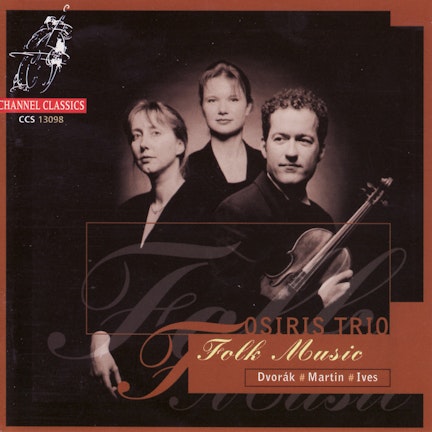
Dvořák, Martin & Ives: Folk Music
Rubinstein: Chamber Works
Duruflé, Gaubert, Bloch & Suzuki: Works for Flute, Cello & Piano
Rita Strohl: Volume 2, Musique de chambre
Irminden. One Hundred Years of Bulgarian Piano Trios
À la mémoire d'un grand artiste: Piano Trios by Tchaikovsky, Rachmaninoff & Goldenweiser