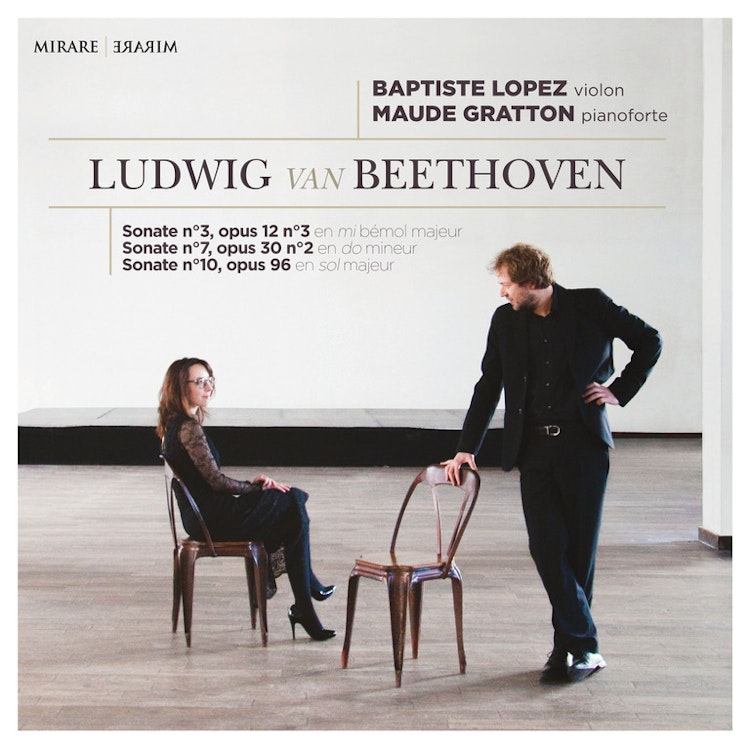
Ludwig van Beethoven: Sonatas No. 3, No. 7 & No. 10
9/22/2017, 11 Tracks, 1:10:20
Featuring
Baptiste Lopez
Maude Gratton
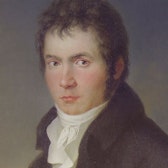
Ludwig van Beethoven
Did you know?
1/7
Composer Biography
Beethoven's powerful and indomitable playing style often damaged the delicate pianos of his era, leading to anecdotes of broken strings and stuck hammers during performances.
Album & Artwork
The album's program was constructed by first deciding to record Beethoven's 10th and last sonata, which the performers found to be the richest and most inspired.
Instruments
The pianoforte used for this recording was built by Maximilian Schott in Vienna in 1835, several years after Beethoven's death.
Composer's Artistic Vision
Beethoven's increasing deafness, which began around 1796, led him to seek greater innovation in his compositions and a need for grandeur and contrasts, breaking classical rules.
Instruments
The album features an anonymous Italian violin from Genoa, 1690, played with an A. Gaulard bow from 1820.
Recording & Production
The recording was made in May 2014 at Airvault, in the Cuvier room of the Jacques Guidez Museum.
Interpretation
The performers chose a pianoforte built slightly after Beethoven's death to better reflect his temperament, genius, and potential expectations for instrument capabilities.
You might also enjoy...
Beethoven:Violin Sonatas Nos. 7 & 8
Beethoven: Violin Sonatas Nos. 3, 7 & 8
Sonata for piano and violin Op. 12 No. 3
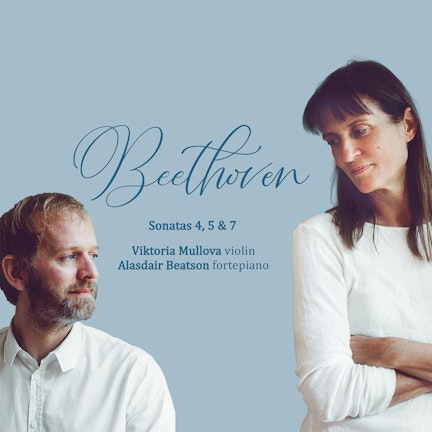
Beethoven: Violin Sonatas 4, 5 & 7
Beethoven: Three Sonatas for Piano and Violin
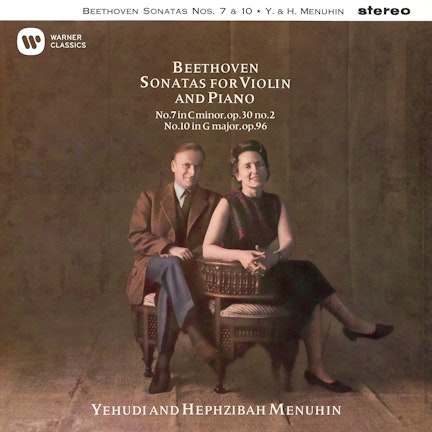
Beethoven: Violin Sonatas Nos. 7 & 10
Beethoven: The Sonatas for Violin and Piano, Volume 2