Narodowa Orkiestra Symfoniczna Polskiego Radia NOSPR
Boys' Choir of the Karol Szymanowski Philharmonic in Cracow
Kraków Philharmonic Chorus
Gustav Mahler
Did you know?
1/7
Composer's Artistic Vision
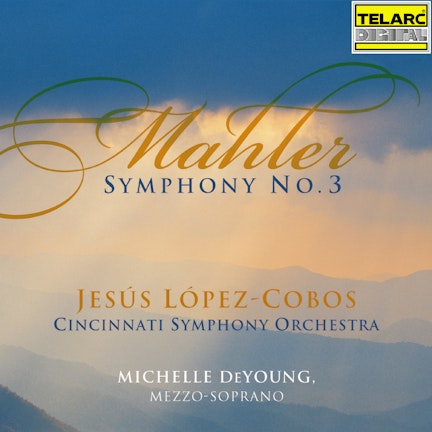
Mahler intended his Third Symphony to "contain all nature and expound deeply mysterious matters," originally giving programmatic titles to its movements.
Composition History
Mahler's Third Symphony was composed during summer holidays, with work beginning in 1893 and completion in 1896 at a rented summer-house.
Composer Biography
Mahler made his career as a conductor, eventually becoming Kapellmeister of the Vienna Court Opera in 1897 after converting to Catholicism.
Composition History
Mahler's Tenth Symphony was sketched in 1910 but remained unfinished at his death, with the first movement being the most complete.
Critical Reception
The first complete performance of Mahler's Third Symphony in 1902 at Krefeld was enthusiastically received, contrasting with a "half premiere" in Berlin where critics were divided.
Composer Biography
Gustav Mahler, the composer, saw himself as "three times homeless": a native of Bohemia in Austria, an Austrian among Germans, and a Jew throughout the whole world.
Compositional Technique
The Third Symphony is scored for a very large orchestra, including four flutes (all doubling piccolo), eight French horns, various percussion, an alto soloist, a women's choir, and a boys' choir.