Winner of the BBC Music Magazine Award 2019 (Orchestral)
Featuring
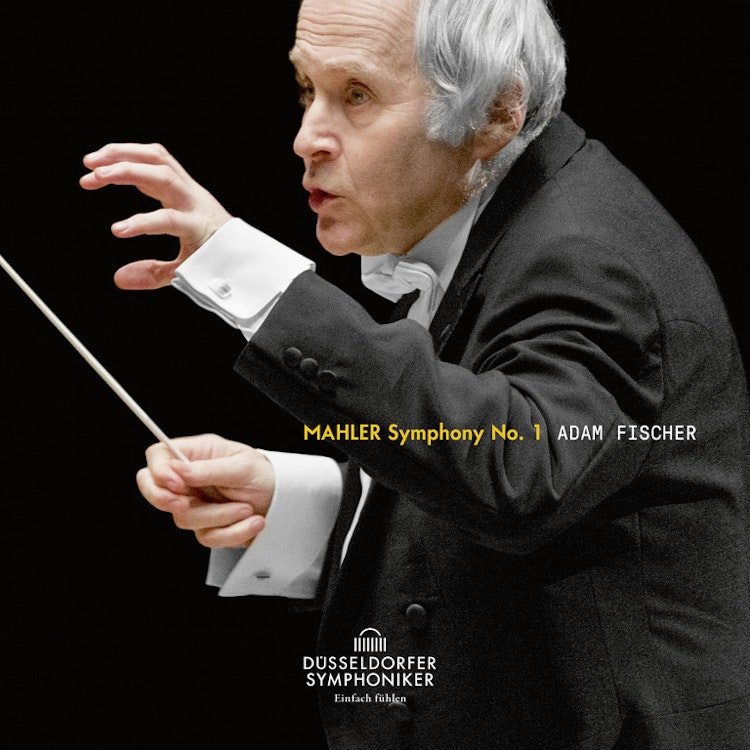
Ádám Fischer
Düsseldorfer Symphoniker
Gustav Mahler
Did you know?
1/7
Composition History
The original second movement of Mahler's First Symphony, titled "Blumine," was removed by the composer for the 1899 publication but was later resurrected during the Mahler revival of the 1960s and 70s.
Composition History
Mahler's First Symphony underwent several revisions and name changes; it was initially presented as a "Symphonic Poem in Two Sections" and later as "Titan: a Tone Poem in the Form of a Symphony" before settling on "Symphony in D Major."
Composer Biography
Gustav Mahler, the composer, was 29 years old when his First Symphony premiered, and he was then the Director of the Hungarian State Opera in Budapest.
Critical Reception
Mahler's First Symphony was a "resounding flop" at its 1889 world premiere in Budapest, with critics dismissing it as "woozy nonsense" and "cacophony," and some even resorting to anti-Semitic remarks.
Compositional Technique
The First Symphony begins unusually with a single note 'a' across the orchestra, and the interval of a fourth forms the core motif, influencing all major themes up to the final chorale.
Performer Biography
Adam Fischer, the conductor of this recording, has served as General Music Director at the Hungarian State Opera, the same position Mahler held 120 years prior, and has conducted in major opera houses worldwide, including Vienna State Opera and the Met.
Interpretation
Conductor Adam Fischer believes that Mahler's specific, sometimes unorthodox, performance instructions, such as horn players standing in the finale, should be followed for their visual and subjective impact, even if their practical effect on sound is debated.