The premiere of Mahler's Sixth Symphony took place in Essen on May 27, 1906.
Composition History
Mahler's Sixth Symphony, though called "The Tragic," was composed during the summers of 1903 and 1904, a period his wife Alma described as "beautiful, free of conflict, and happy."
Compositional Technique
The Sixth Symphony is unique among Mahler's symphonies for its minor-key finale, which is described as "quite devastating."
Recording & Production
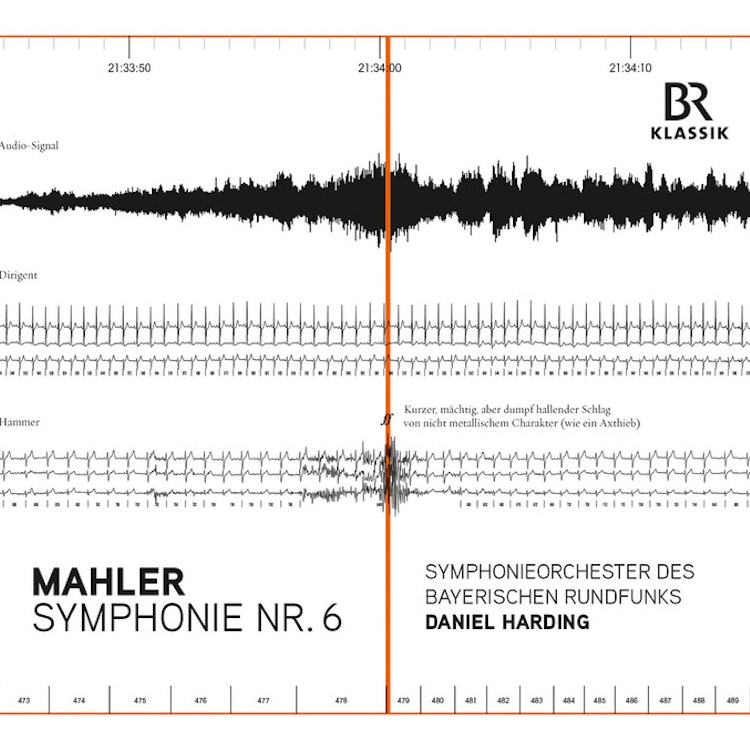
During this live recording of Mahler's Sixth Symphony, four musicians and conductor Daniel Harding wore ECG devices to monitor their heart rates, revealing that the physical stress was comparable to that of professional athletes or Formula One drivers.
Compositional Technique
The famous "hammer blows" in the Sixth Symphony, originally three but later reduced to two by Mahler, are typically realized today by a wooden mallet hitting a wooden beam, producing a "dull in resonance, and of a non-metallic character (like an axe blow)" sound.
Performer Biography
Daniel Harding, the conductor on this recording, began his career assisting Sir Simon Rattle and Claudio Abbado, and is currently Music Director of the Swedish Radio Symphony Orchestra.
Compositional Technique
The symphony features a distinctive main motif with a martial character, first heard in bar 57 of the first movement and recurring until the final bars of the fourth movement.