Mahler temporarily attached descriptive titles to each movement, such as 'What the flowers in the meadow tell me' and 'What man tells me', to explain the symphony's structure and meaning.
Composition History
Mahler's Symphony No. 3 is extraordinary for its two parts, six movements (he once planned a seventh), two vocal settings, and a duration of over one and a half hours.
Composer's Artistic Vision
Mahler associated the symphony with a Darwinian parable of evolution or a stepwise gradation of existence, as propounded by his favorite philosopher, Gustav Fechner.
Composition History
The third movement's musical kernel was an early 'Wunderhorn' setting called 'Ablösung im Sommer' ('The changing of the Summer Guard'), composed between 1888 and 1891.
Performer Biography
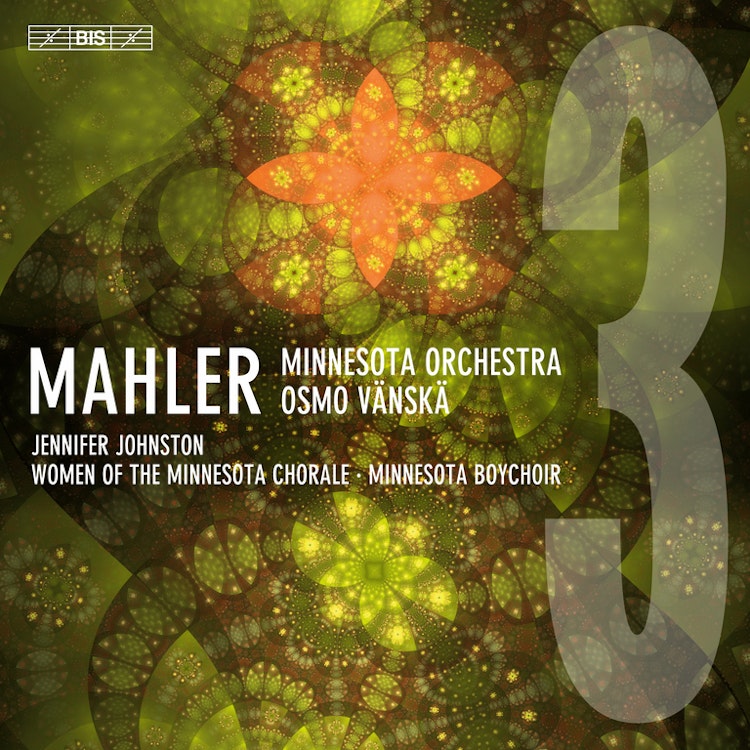
Osmo Vänskä, conductor laureate of the Minnesota Orchestra, was its music director for 19 years and is known for his compelling interpretations and energetic presence.
Compositional Technique
The symphony features an extended Wagnerian woodwind and brass section, a posthorn, a large array of percussion, women's chorus, alto soloist, and boys' choir placed on high with tuned bells.
Composer's Artistic Vision
Mahler eventually rejected the idea of providing programmatic titles for his Third Symphony, viewing them as 'utterly inadequate', but still acknowledged an 'increasing articulation of feeling' in the music.