The symphony's unconventional nature and inclusion of popular musical forms led one Viennese critic in 1904 to suggest the composer be jailed for his impertinence.
Performer Biography
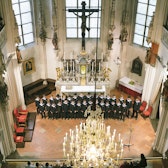
The Wiener Singverein, an amateur choir, has premiered central works of the choral repertoire, including Mahler's Eighth Symphony, and is considered one of the world's best concert choirs.
Composer Biography
Gustav Mahler composed his monumental Third Symphony in his personal summer retreat, a newly built "composing hut" in Steinbach am Attersee, Austria.
Compositional Technique
Mahler's Third Symphony incorporates diverse elements like military marches, brass fanfares, nature sounds, folksongs, and dance music, placing them on equal footing with traditional art.
Compositional Technique
The symphony's programmatic plan, influenced by Siegfried Lipiner's poem "Genesis," musically treats progressively higher forms of existence, from "rigid matter" to divine love.
Composer's Artistic Vision
Mahler intended his Third Symphony to give a voice to all of nature, telling deep secrets that one might only glimpse in dreams, viewing himself as an instrument played by the universe.
Composition History
Mahler's Third Symphony is his longest and most comprehensive work in a cycle of symphonies (Nos. 2-4) that draws inspiration and text for vocal parts from the folk song collection "Des Knaben Wunderhorn."