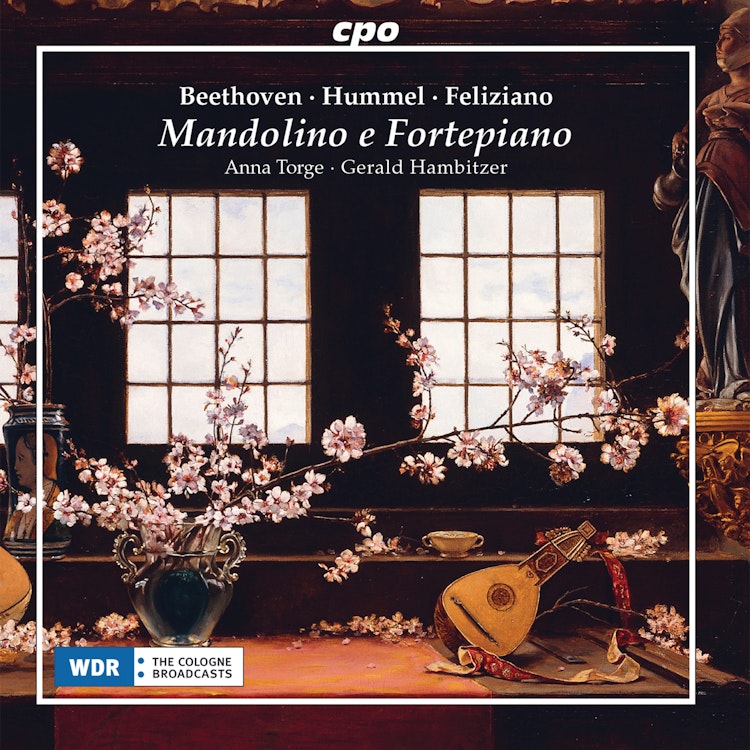
Anna Torge, a leading historical mandolin soloist, has performed with prominent ensembles like Concerto Köln and the Academy for Early Music, and with conductors such as Mariss Jansons and Riccardo Muti.
Historical Context
In the mid-18th century, Italian mandolin virtuosos sparked a 'classical golden age' of mandolin playing in France, particularly in Parisian salons, where the nobility and bourgeoisie embraced the instrument.
Instruments
The mandolin's elegant sound was historically produced by gut, copper, or silver-wrapped strings, played with a quill or a plectrum made of bark, not steel strings.
Composition History
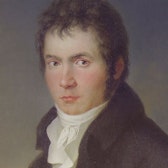
Ludwig van Beethoven composed works for mandolin and keyboard instrument for Countess Josefine Clary-Aldringen, who played the mandolin with 'much grace, ability and passion'.
Instruments
The mandolin, a member of the lute family, was brought to Spain by the Moors in the 11th century and was known by many names across Europe before the Baroque era.
Instruments
During the Baroque era, two types of mandolins existed: one with 6 courses tuned like a lute, and another with 4 courses tuned like a violin.
Composition History
Johann Nepomuk Hummel, a famous composer, wrote his Grande Sonata for Mandolin and Piano around 1804, which is considered the last great work of the Classical Golden Age of the mandolin.
You might also enjoy...
Arioso & Brillante
Dvořák: 8 Humoresques & Other Works
Trumpet Voluntary
Baroque à la carte
Dubery: Songs and Chamber Music
Ferdinando De Sena: Spalding's Bounce & Other Chamber Works
Collaboration
Heartland: An Appalachian Anthology
Beethoven: Works for Flute, Vol. 1
Vivaldi & Piazzolla: 8 Seasons
Beethoven: Chamber Music for Winds, Vol. 1
Straube, Ponce & Dodgson: Music for Guitar & Harpsichord
Rampal & Kudo Play Telemann, Kuhlau, Bach, Mozart & Doppler