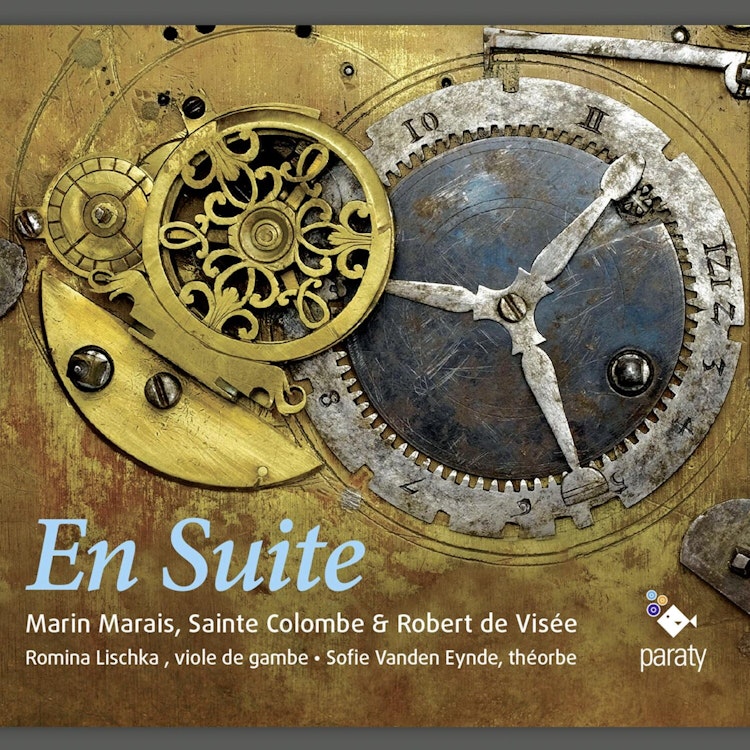
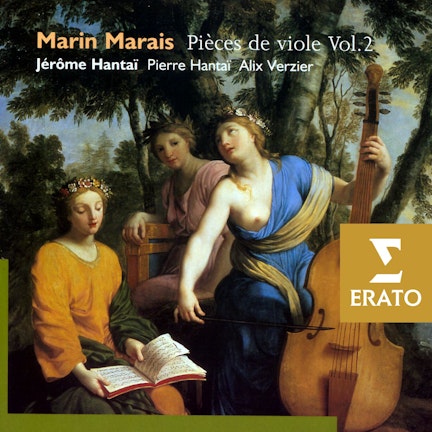
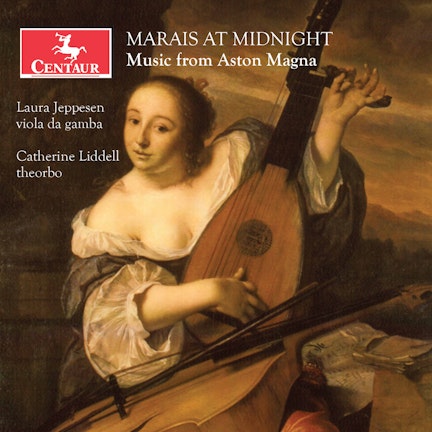
The viola da gamba and theorbo, though one is bowed and the other plucked, share a common history, both originating from the Spanish vihuela.
Composer Biography
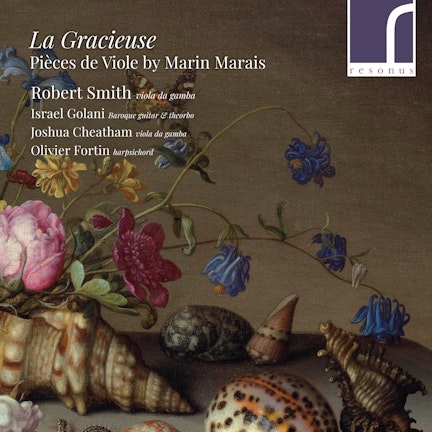
Marin Marais (1656-1728), a French composer and viol player, composed five books of Pièces de viole between 1686 and 1725, containing 596 pieces in 39 suites.
Historical Context
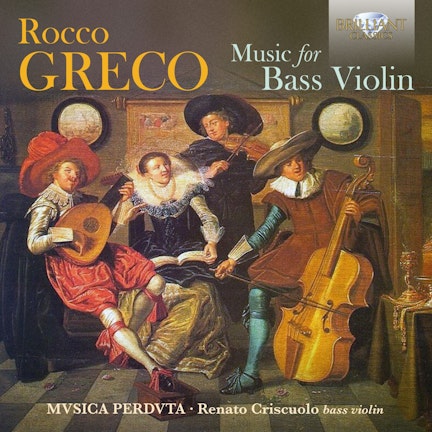
The viola da gamba was introduced to Italy from Spain by the Borgia popes, where the first consorts (families of viols) were created.
Composer's Artistic Vision
Marin Marais and Robert de Visée shared a loyalty to the absolutist aesthetics of Louis XIV, their employer, which influenced their music's adherence to dance as a model.
Composer Biography
Sainte Colombe (c. 1658-1701), Marin Marais's teacher, pioneered technical innovations for the bass viol, including silver-wound strings and an extra bass string.
Compositional Technique
Marin Marais's Pièces de viole elegantly combine melodic and chord-heavy polyphonic writing, addressing a debate among gamba players of his time.
Composer Biography
Robert de Visée (c. 1655-1733), like Marin Marais, was a Musicien de la Chambre du Roi and was skilled in arranging his own compositions for various instruments.