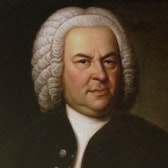
J.S. Bach's Musical Offering originated from a visit to King Frederick the Great in 1747, where Bach improvised a fugue on a theme given to him by the King.
Composer Biography
Markevitch made a conscious decision to abandon composing at the age of 29 in 1941, a unique case in music history, and focused on conducting instead.
Composer's Artistic Vision
Bach's inscription R.I.C.E.R.C.A.R. ('Regis Iussu Cantio Et Reliqua Canonica Arte Resoluta' - 'By the King's Command, the Song and the Remainder Resolved by Canonic Art') suggests the entire Musical Offering is a 'searching for' the essence of the Emperor's theme.
Recording & Production
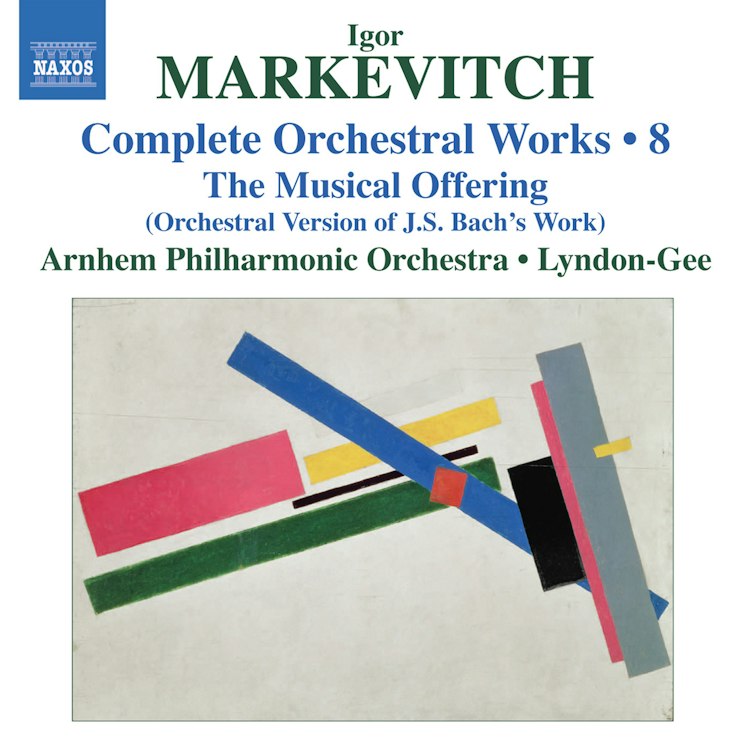
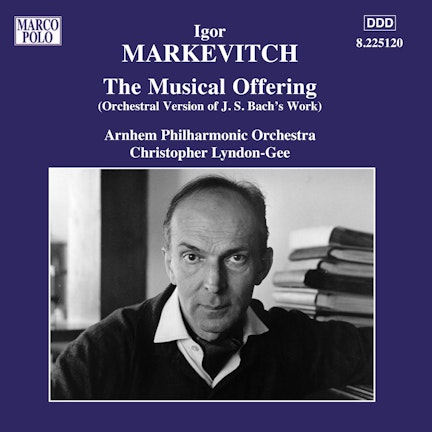
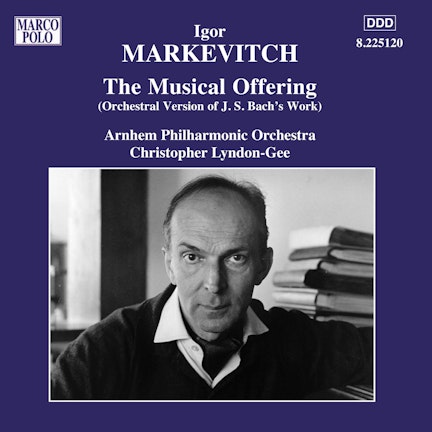
This recording is the eighth and final volume of the complete orchestral works of Igor Markevitch, completing a portrait of him as a master orchestrator.
Composer Biography
Igor Markevitch, the arranger of this work, was hailed in the 1930s as one of the most challenging voices of his time, yet he largely avoided programming his own original scores after 1938.
Interpretation
Igor Markevitch's arrangement of Bach's Musical Offering reorders the movements and casts the work for three orchestral groups, stereophonically disposed on stage, to create a satisfying structure and clarify the thematic material.
Compositional Technique
Bach's Musical Offering includes ten canons, some of which are 'puzzle' canons, where only the heading is given, challenging a resourceful composer to realize their working out.