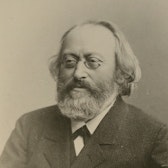
Max Bruch believed that a good folk tune was more valuable than 200 art melodies, and that studying folk music was essential for a composer.
Composer Biography
Max Bruch expressed frustration that many violinists only wanted to play his First Violin Concerto, despite him having written other equally good or better concertos.
Recording & Production
This album is part of the #zusammenspielen (#playing together) series, created by German radio station SWR 2 in 2020 to invite musicians into their studios during the Covid pandemic.
Recording & Production
The Duo Dauenhauer Kuen discovered Max Bruch's 'Swedish Dances op.63' during repertoire research and chose it for this recording.
Performer Biography
The Duo Dauenhauer Kuen, consisting of violinist Anna Sophie Dauenhauer and pianist Lukas Maria Kuen, formed in 2008 at the University of Music Munich.
Recording & Production
The scores for Max Bruch's 'Songs and dances after Russian and Swedish Folk melodies op.79' were obtained from the Max Bruch-Archive in Cologne because the piece is no longer in print.
Critical Reception
Max Bruch's 'Swedish Dances' did not achieve the popularity he expected, unlike the 'Hungarian Dances' by his admired contemporary Johannes Brahms.
You might also enjoy...
Heifetz: Variations For Violin & Piano
Mendelssohn · Brahms · Grieg: Violin Sonatas
F. Poulenc: Violin Sonata & R. Schumann: Violin Sonata No. 1