Bartók aligned himself with atonality in a 1920 essay, viewing it not as a negation of tonality but as an expansion allowing diverse harmonies.
Compositional Technique
The rhapsodies, unlike the sonatas, are in 'Hungarian export' style, combining diverse national elements and leaning towards Romanian and Hungarian folk models.
Performer Biography
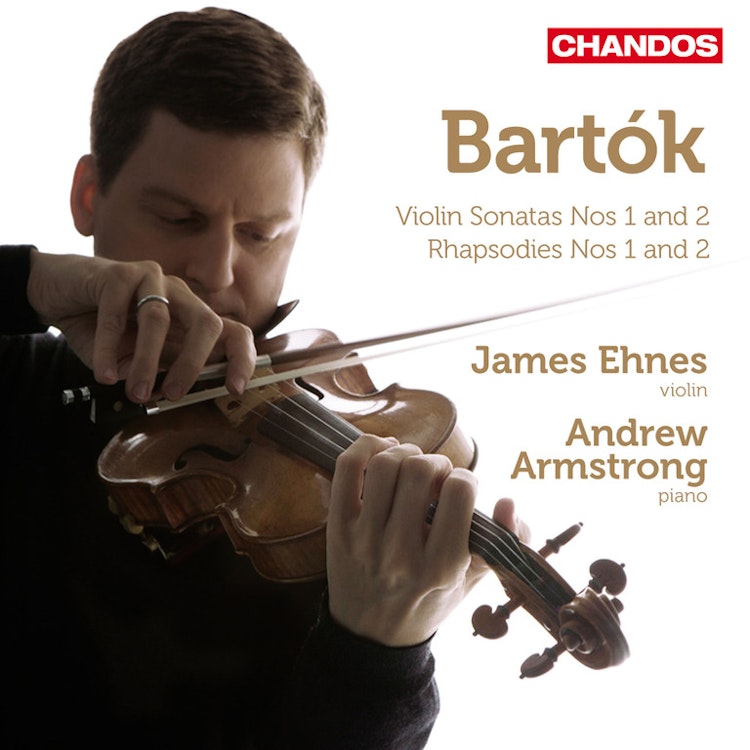
James Ehnes, the violinist on this recording, is hailed as 'the Jascha Heifetz of our day' and has received numerous international awards, including a Grammy and six Junos.
Composer Biography
Béla Bartók, the composer, began his long association with the violin and violinists as a student at the Liszt Academy in Budapest.
Instruments
James Ehnes, the violinist, plays the 'Marsick' Stradivarius of 1715.
Composition History
Bartók composed his two violin sonatas of 1921 and 1922 with Adila Arányi in mind, but dedicated them to her sister, Jelly d'Arányi, a professional violinist.
Recording & Production
This recording uses 24-bit technology, which offers a dynamic range up to 48 dB greater and 256 times the resolution of standard 16-bit recordings.
You might also enjoy...
Szymanowski: Violin Sonata / Mythes / Notturne and Tarantella
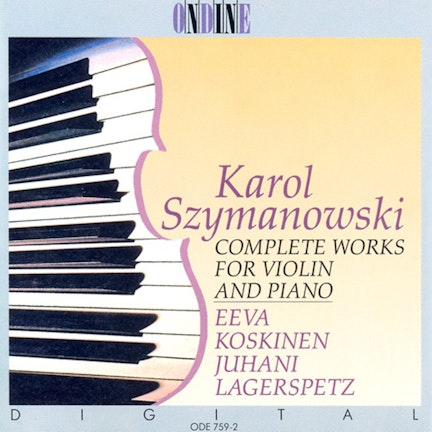
Szymanowski: Works for Violin & Piano
Szymanowski, K.: Violin and Piano Music (Complete)