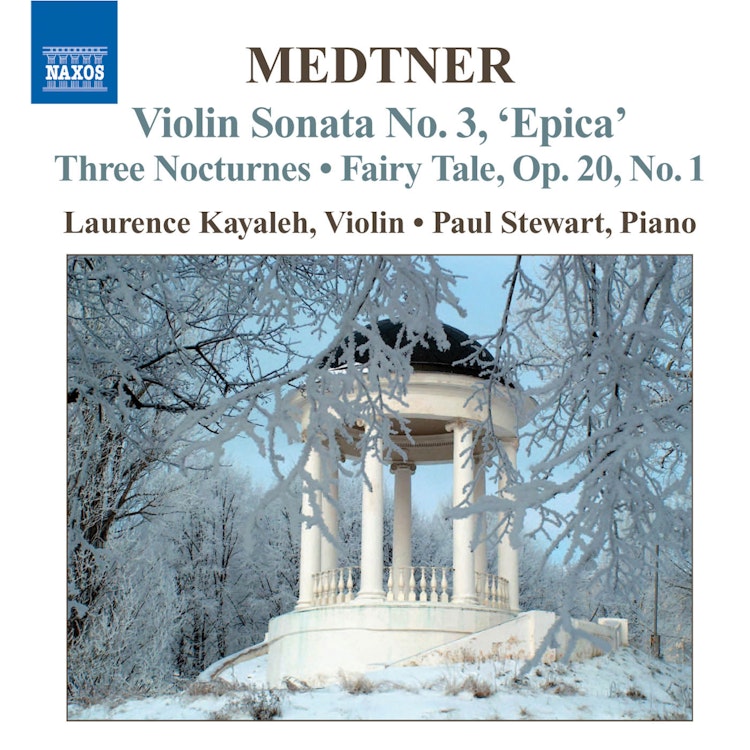
Medtner: Works for Violin and Piano (Complete), Vol. 1
2/1/2008, 9 Tracks, 1:03:47
Featuring
Laurence Kayaleh
Paul Stewart
Nikolai Medtner
Did you know?
1/7
Composition History
Medtner's Sonata in E Minor, 'Epica', Op. 57, was dedicated 'To the memory of my brother Emil' and intended as both a homage and an act of atonement, as Medtner's wife Anna had previously been married to Emil.
Compositional Technique
The Third Sonata's 'Russian-ness' is partly due to Medtner's conversion to the Orthodox faith and his growing acceptance of permanent exile from Russia, with the Finale filled with allusions to folk-dances and Orthodox liturgical chants.
Composer Biography
An Indian prince, the Maharaja of Mysore, founded a Medtner Society to promote and record Medtner playing his own works, yielding a legacy of his definitive interpretations between 1947 and 1950.
Composer Biography
Sergey Rachmaninov, a staunch supporter and loyal friend of Medtner, considered him 'the greatest composer of our time' and dedicated his Fourth Piano Concerto to him.
Historical Context
After the Russian Revolution, Medtner and his wife were granted visas to leave Russia in late 1921 and never returned, settling in England in 1935.
Composition History
Medtner's Three Nocturnes, Op. 16, were originally conceived as a vocal setting of a Goethe poem, but he fashioned them into an instrumental 'song without words'.
Composer's Artistic Vision
Nikolay Medtner's scores are distinctly Russian, unabashedly Romantic, and full-bodied, yet intellectually devised with every note having a purpose or 'a destiny'.
You might also enjoy...
Covatti, Dussaut, Honegger, d'Indy: Sonatas for Violin and Piano
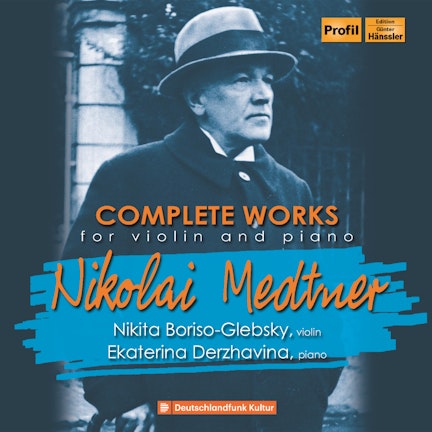
Medtner: Complete Works for Violin & Piano
Unerhörte Schätze
To the Spring
Carl Nielsen: Works for Violin Vol. 1
Röntgen: Works for Violin & Piano, Vol. 1
Shostakovich: 24 Preludes, Opus 34 For Violin And Piano / Sonata For Violin And Piano, Opus 134