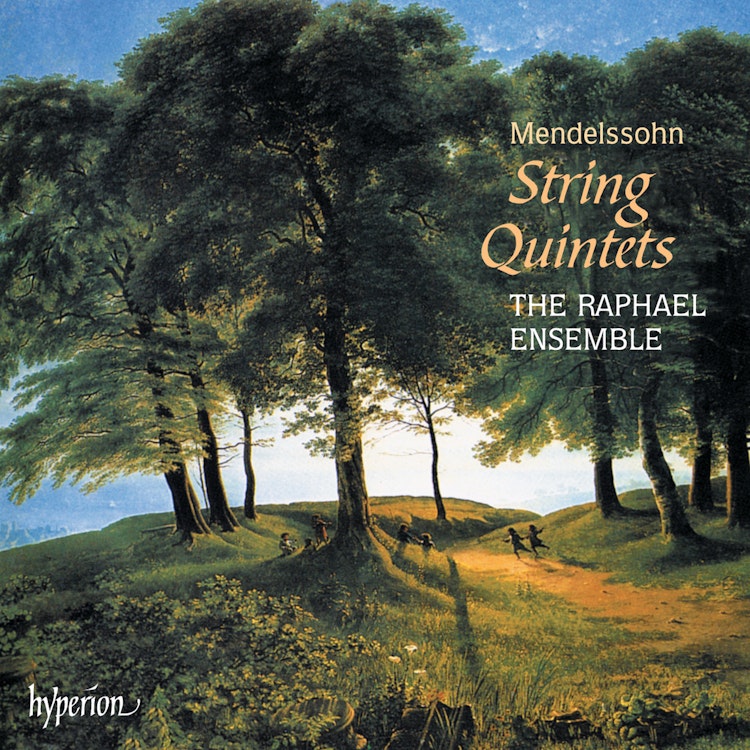
This album was recorded in St George's, Brandon Hill, Bristol, on June 23-25, 1997, with Tony Faulkner as the Recording Engineer and Andrew Keener as the Recording Producer.
Composition History
Mendelssohn's String Quintet No. 2 in B flat major, Op. 87, dates from 1845, just two years before his premature death and a year before his triumphant success with the oratorio Elijah.
Compositional Technique
Mendelssohn had an intimate understanding of string music, knowing how to achieve maximum brilliance with minimal technique, and balanced the parts unusually well despite the first violin's typical dominance.
Composer's Artistic Vision
Mendelssohn was the only major composer of his generation to adopt an openly neo-Classical style, yet he also looked forward to the Romantic era with his lyrical approach to sonata structures.
Composer Biography
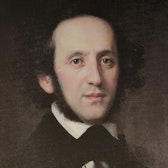
Felix Mendelssohn was a child prodigy who, by age sixteen, had already composed his masterly String Octet and excelled as a violinist, pianist, athlete, poet, multi-linguist, watercolourist, and philosopher.
Compositional Technique
Many claim Mendelssohn's most lasting contribution to Western music was his novel form of gossamer-textured Scherzo, filled with darting, half-illuminated, interweaving ideas.
Composition History
Mendelssohn's String Quintet No. 1 in A major, Op. 18, was written in 1826 when he was seventeen, but he later substituted a new slow movement in 1832 in memory of his friend, the violinist Eduard Rietz.
You might also enjoy...
Mendelssohn: String Quintets Nos. 1 in A Major and 2 in B-Flat Major
Mendelssohn Bartholdy: Complete Chamber Music for Strings, Vol. 4
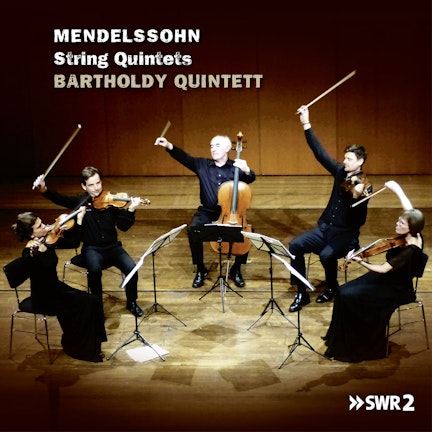
Mendelssohn: String Quintets (Complete)
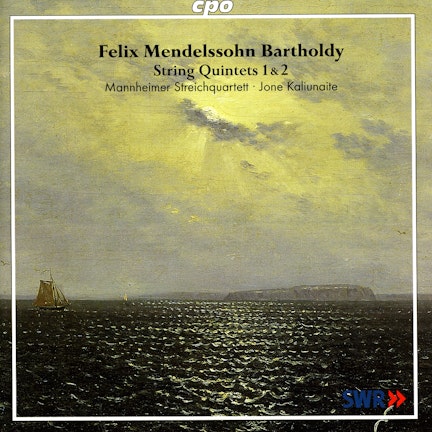
Mendelssohn: String Quintets Nos. 1 & 2
Bruch: String Quintet in E-Flat Major - Mendelssohn: String Quintets Nos. 1 & 2
Mendelssohn: String Quintets
Mendelssohn: String Quintets
Mendelssohn, Felix: String Quintets Nos. 1 and 2
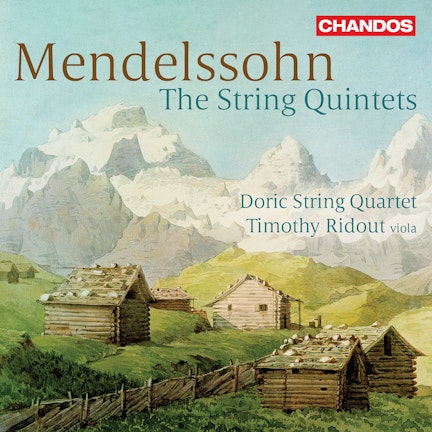
Mendelssohn: The String Quintets
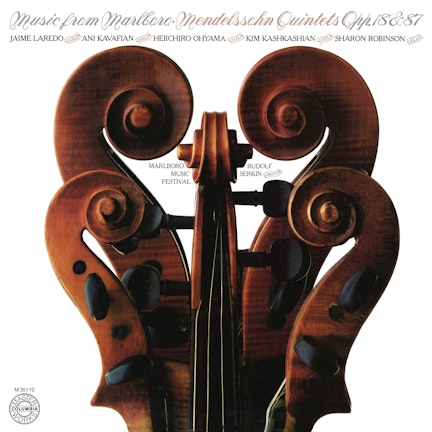
Music from Marlboro: Mendelssohn Quintets Opp. 18 & 87