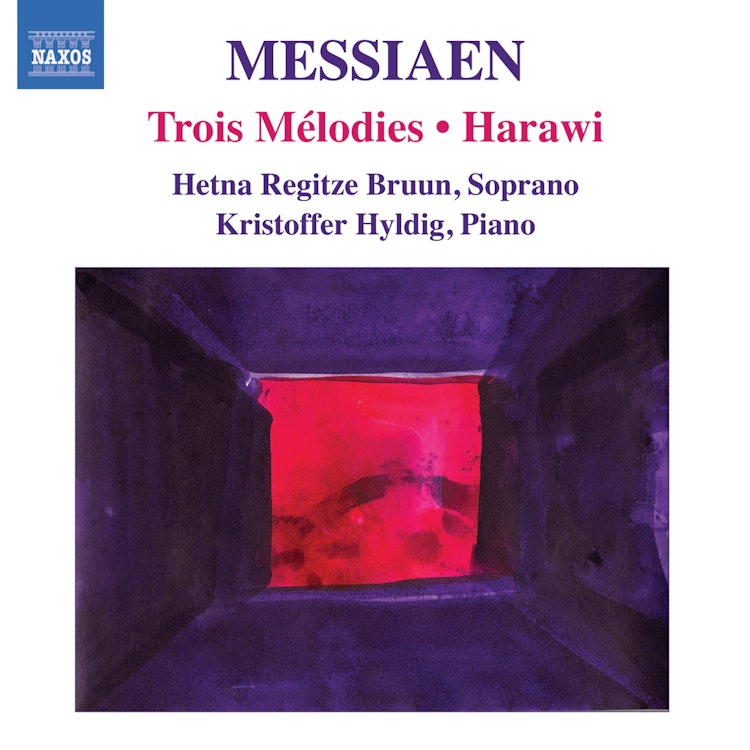
In Harawi, Messiaen uses words from the Andean Quechua language for their sound quality and onomatopoeic effect, rather than their semantic meaning.
Composer's Artistic Vision
Messiaen was fascinated by birdsong since his teenage years, describing birds as 'probably the greatest musicians to inhabit our planet,' and meticulously notated them for use in his music.
Compositional Technique
Messiaen developed 'modes of limited transpositions,' selecting patterns of 6, 8, 9, or 10 notes from the chromatic scale that repeat after a limited number of transpositions, which became sources for his melodies and harmonies.
Composer Biography
Olivier Messiaen, born in 1908, came from a literary family; his father was a translator and his mother, Cécile Sauvage, was a published poet.
Composition History
Harawi, along with the Turangalîla-symphonie and Cinq Rechants, forms what Messiaen called his 'Tristan trilogy,' exploring themes of love and death.
Composer Biography
Messiaen served as organist at the Église de la Sainte-Trinité in Paris from 1931 until his death, making a significant contribution to the organ repertoire.
Composition History
The song cycle Harawi, subtitled 'Songs of Love and Death,' was inspired by Peruvian legends and folksongs, as well as the Celtic legend of Tristan and Isolde, whose love is fulfilled only in death.
You might also enjoy...
R. Strauss: Complete Songs, Vol. 1
Songs
Lieder: Schumann / Mozart / Haydn / Beethoven / Schubert / Wolf
Vocal Cycles and Romances by Russian Composers
Liszt: Italia, sogno d'amore
Shining Night
Songs of Love and Longing (The Royal Academy of Music Bicentenary Series)