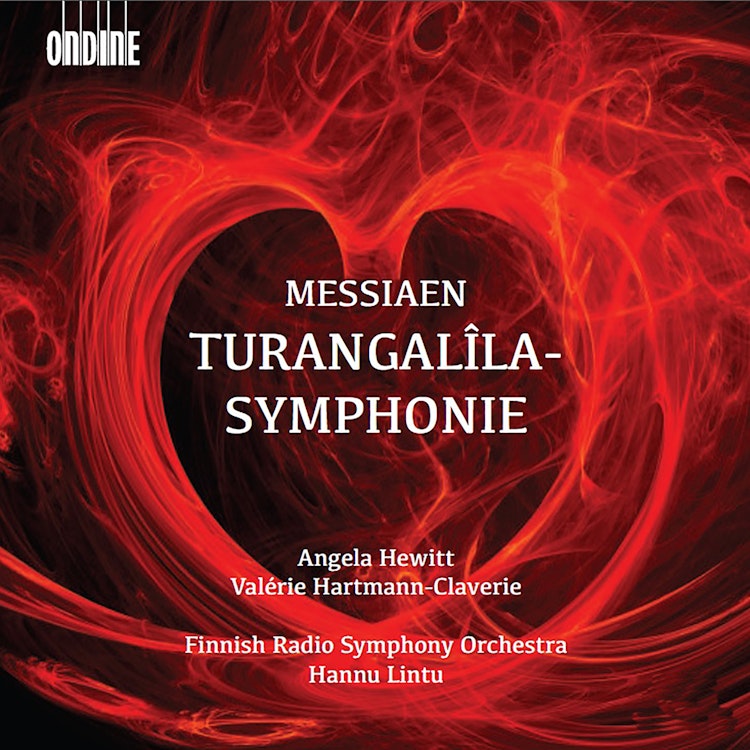
Messiaen's Turangalîla-Symphonie was commissioned by Serge Koussevitzky, a Russian émigré and conductor of the Boston Symphony Orchestra, who had also commissioned works from Stravinsky, Ravel, Hindemith, and Bartók.
Notable Performances
The Turangalîla-Symphonie was premiered by the Boston Symphony Orchestra under the baton of a 31-year-old Leonard Bernstein on December 2, 1949, with reactions ranging from hostility to admiration.
Composer Biography
Olivier Messiaen, born in 1908, was the son of a Shakespearean scholar and a well-known poetess, influencing his early literary and theatrical awareness.
Composer's Artistic Vision
The Turangalîla-Symphonie, along with two other works from the same period, shares a common literary basis in the legend of Tristan and Yseult, exploring the theme of irresistible and ultimately fatal love.
Composer's Artistic Vision
Messiaen, a devout Catholic and organist at Église de la Sainte-Trinité for over sixty years, also embraced the spiritual aspirations of other cultures, particularly Indian aesthetics, incorporating talas and ragas (Indian rhythms and scales) into his music.
Compositional Technique
Messiaen's music features uniquely rich sonorities through the integration of 'world music' elements, detailed transcriptions of birdsong, and the innovative use of the electro-acoustic ondes Martenot.
Compositional Technique
The title "Turangalîla" is a Sanskrit word, chosen by Messiaen to mean "all at the same time song of love, hymn to joy, time, movement, rhythm, life and death."