Kerll became Chapelmaster at the court of Bavarian Elector Ferdinand Maria in Munich at the age of 29, being the first German in decades to hold such a position.
Compositional Technique
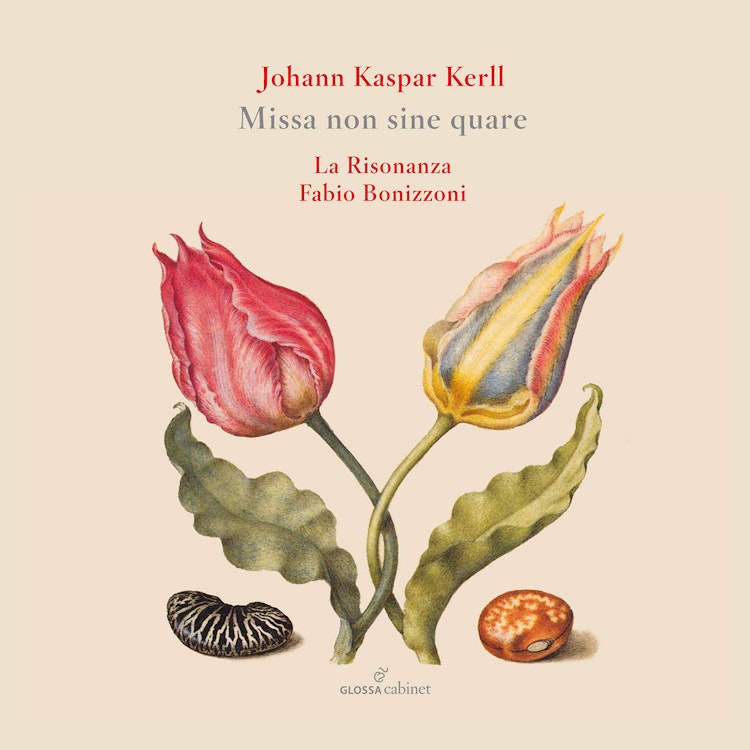
Kerll's Missa non sine quare demonstrates his mastery of counterpoint, featuring superb imitative counterpoint in both solo and tutti sections, balanced with homophonic passages.
Composer's Artistic Vision
The title Missa non sine quare means 'not without reason,' and Kerll explained that the mass's five Ordinary parts are based on an organ theme he wrote during the great plague of Vienna in 1679.
Composition History
Kerll's Missa non sine quare is the first of a collection of six masses, MISSAE SEX, printed in Munich in 1689 and dedicated to the Emperor.
Composer Biography
Johann Kaspar Kerll, born in Saxony in 1627, received early organ instruction from his father and was later invited to Vienna by Archduke Leopold-Wilhelm to study counterpoint.
Interpretation
For this recording, the performers used a manuscript of the Missa non sine quare from the Benedictine archives of Kremsmünster, which indicated a specific instrumentation including a cornetto to reinforce the soprano voice.
Cultural Impact
Kerll's melodic ingenuity, contrapuntal finesse, and harmonic audacity were admired by J. S. Bach and Händel, with Händel even borrowing many keyboard themes from Kerll for his own compositions.
You might also enjoy...
Georg Friedrich Händel: Italian Cantatas & Arias
Handel in Italy Vol. 2
Schütz: Weihnachtshistorie, SWV 435
Schütz: Weihnachtshistorie, SWV 435
Historia Nativitatis
Handel & Companye
Festive Arias (Live)
J.S. Bach - The Vocal Works
Handel antes de "El Mesías": Cantatas a una, dos y tres voces