Missa Russica, Vol. 2 (Le concert et l'église russe au XXe siècle)
10/20/2004, 8 Tracks, 1:00:11
Featuring
Johann Shenrock
Chœur orthodoxe russe de Riga
Dimitri Moîsseîevitch Iaïtchkov
Pavel Grigorievich Chesnokov
Sergei Rachmaninoff
Apostol Nikolaev-Strumski
Vladimir Martynov
Did you know?
1/7
Historical Context
Russian Orthodox liturgical chant is characterized by the complete absence of musical instruments, a practice rooted in theological reasoning that prioritizes the objective expression of prayer.
Performer Biography
Archpriest Johann Shenrock, the choir's leader since its inception, is a priest's son who studied at the Moscow Theological Seminary and the Riga Conservatory.
Historical Context
The principle of purely vocal liturgical music was common to all Christianity until the Great East-West Schism of 1052, after which it was abandoned by the Catholic Church but maintained in the Orthodox Church.
Composer's Artistic Vision
Some composers in the early 20th century even advocated for introducing instruments into churches to broaden their creative scope, challenging the theological principles of the Orthodox Church.
Performer Biography
The Riga Russian Orthodox Choir, the first professional ensemble in Latvia specializing in church music, was founded in 1989 under the patronage of Metropolitan Leonid of Latvia and Riga.
Compositional Technique
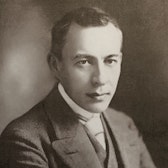
Serge Rachmaninov (1873-1943) used a 16th-century melody from Kiev as the basis for his Cantique de Siméon, which he considered one of his most accomplished works.
Composition History
From the 17th century onwards, Russian church choral music began to incorporate Western polyphony, influenced by trends from Poland, Germany, and Italy.
You might also enjoy...
Russian Choral Concertos: An Introduction
A cappella
Pater noster: Geisitliche Chormusik aus Fünf Jahrhunderten