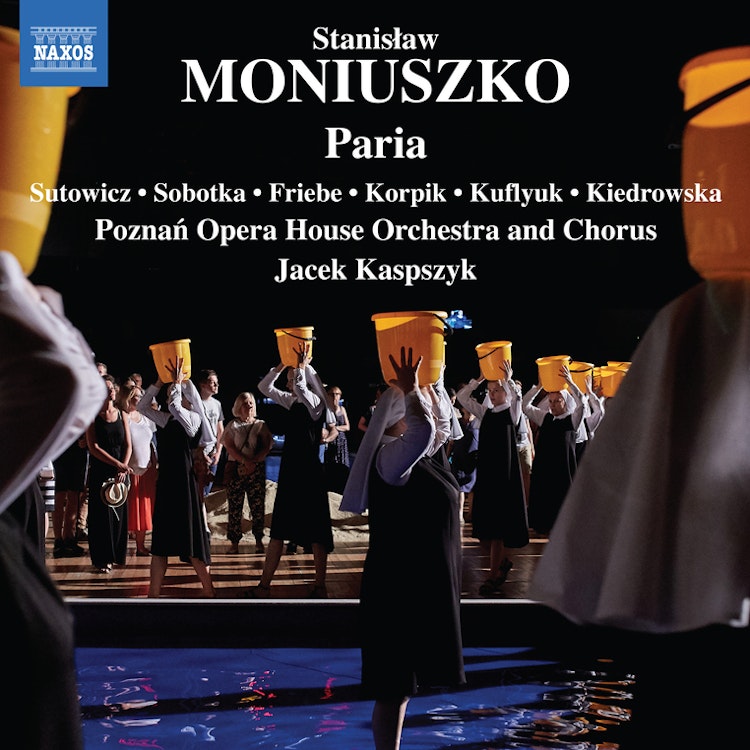
Paria premiered in 1869 to reserved critical opinions and an audience craving works like Moniuszko's earlier operas, Halka or The Haunted Manor, which featured national dances and folkloric references.
Interpretation
Music director Gabriel Chmura noted that Moniuszko's Paria is bolder than his other operas, leaning towards German composers like Mendelssohn and Schubert rather than Italian ones.
Composer Biography
Stanisław Moniuszko, a Polish composer, conductor, and teacher, is widely recognized in his home country as 'the father of Polish national opera'.
Composer's Artistic Vision
With Paria, Moniuszko aimed to shed his label as a national composer and gain international acclaim by addressing a universal topic with exotic scenery, based on a widely known tragedy by Delavigne.
Critical Reception
Despite its initial reception, Moniuszko's Paria received the prestigious International Opera Award for Rediscovered Work in 2021, 200 years after the composer's birth.
Cultural Impact
The opera Paria, with its themes of exclusion, stereotypes, and the caste system, is considered an opera for our times, revealing xenophobia and tyranny within the family.
Composition History
Moniuszko spent many years creating his opera Paria, which was inspired by Casimir Delavigne's tragedy Le Paria, a work he admired since he was 17.
You might also enjoy...
Thomas: Hamlet
Puccini:Turandot
Rossini: Guillaume Tell
Rossini: Sigismondo
Pierne: Cydalise et le Chevre-Pied
Rossini: Eduardo e Cristina
Puccini: Manon Lescaut - The Sony Opera House
Massenet: Thaïs
Antonín Dvorák: Rusalka (Opera) [Highlights] [Sung in German] [Mitzewa]