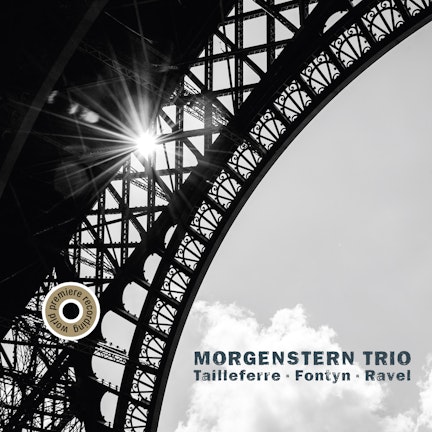
The Morgenstern Trio was drawn to the works on this album to explore the historical context and mutual influence among composers, particularly how French-speaking composers admired or distanced themselves from Ravel.
Composition History
Germaine Tailleferre's Piano Trio, her last major work, was started in 1916, interrupted by World War I, and only resumed and completed in 1978 after a commission from the French Ministry of Culture.
Compositional Technique
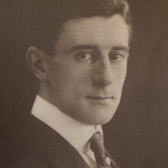
Maurice Ravel's Piano Trio features a concise structure and traditional elements like a passacaglia in the third movement, but also incorporates rhythmic complexities inspired by Stravinsky and exotic influences, such as the Malaysian poetry form Pantoum in the second movement.
Album & Artwork
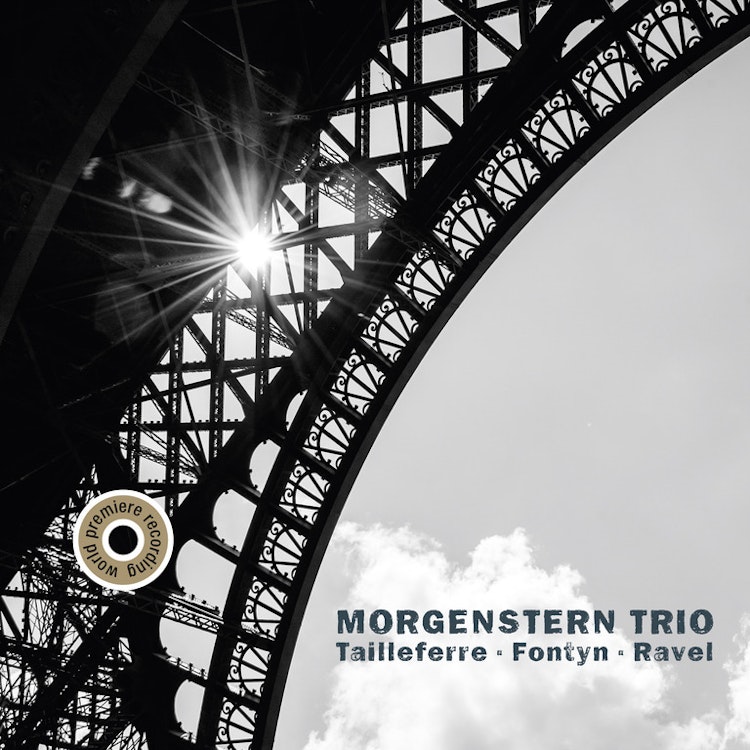
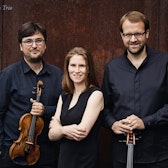
The Morgenstern Trio, named after German poet Christian Morgenstern, chose a program of Franco-Belgian composers for this album, centered around Ravel's Piano Trio.
Composer's Artistic Vision
Germaine Tailleferre, a composer on this album, believed that music should express 'one's own personality' rather than attempting to 'translate an epoch,' and that music should bring pleasure, not intellectual problems.
Compositional Technique
Jacqueline Fontyn's Piano Trio, written after her composition studies, incorporates freely handled twelve-tone rows while occasionally allowing tonal feelings to emerge, and includes a four-part fugue in its third movement.
Composer Biography
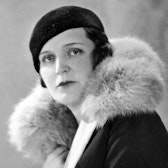
Germaine Tailleferre, a composer featured on this album, was a good friend of Maurice Ravel, studied orchestration with him, and was the only female member of the Groupe des Six.