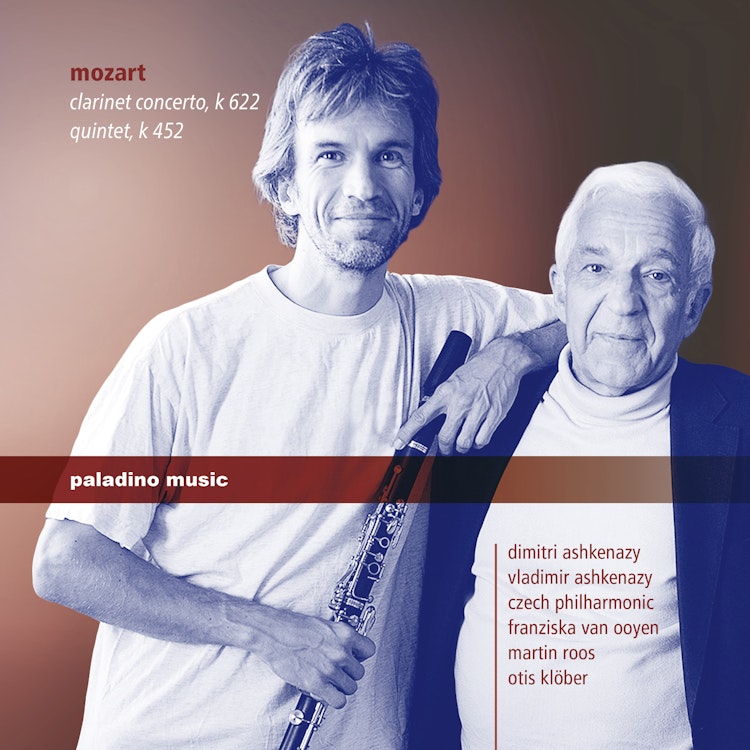
Mozart: Clarinet Concerto in A Major, K. 622 & Piano Quintet in E-Flat Major, K. 452
1/5/2018, 6 Tracks, 53:13
Featuring
Vladimir Ashkenazy
Dimitri Ashkenazy
Franziska van Ooyen
Otis Klöber
Martin Roos
Czech Philharmonic
Wolfgang Amadeus Mozart
Did you know?
1/7
Composer's Artistic Vision
Mozart considered his Quintet for Piano and Winds to be the best work he had written in his life, as he informed his father after its premiere in 1784.
Compositional Technique
In his Quintet for Piano and Winds, Mozart created a unique chamber music piece where the piano's role is equal to that of the four wind instruments, rather than a disguised piano concerto.
Performer Biography
Dimitri Ashkenazy, the clarinetist on this album, is the son of renowned pianist and conductor Vladimir Ashkenazy, who also performs on this recording.
Instruments
The Clarinet Concerto was written for the basset clarinet, an instrument invented in 1788 by Lodz and improved by Mozart's close friend, the distinguished clarinettist Anton Stadler.
Composer Biography
Mozart died scarcely two months after completing the Clarinet Concerto in October 1791, meaning he never heard it performed in concert.
Cultural Impact
Mozart's Eb major Quintet was a landmark work for its ensemble, admired and emulated by Beethoven in his own Quintet Op.16 in 1796.
Composition History
Mozart's Clarinet Concerto, his last wind concerto and last concerto overall, was originally conceived for basset horn in G major in 1789.
You might also enjoy...
Mozart: Clarinet Quintet, K. 581 - Piano Quintet, K. 452
Tashi Plays Mozart
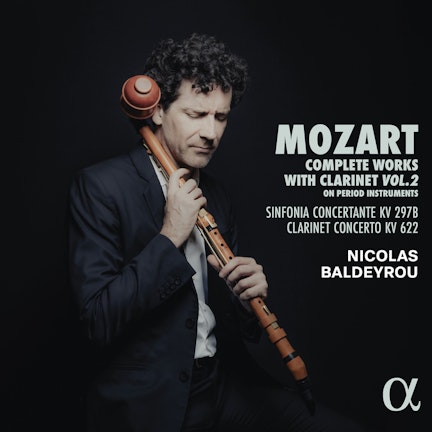
Mozart: Complete Works for Clarinet, Vol. 2
Mozart: The Wind Concertos
Mozart: Concertos
Mozart: Clarinet Concerto; Flute Concerto; Bassoon Concerto in B
Mozart: Wind Concertos
Mozart: Wind Concertos
Trumpet Recital: Friedrich, Reinhold - Hummel, J.N. / Haydn, M. / Haydn, F.J. / Mozart, L.