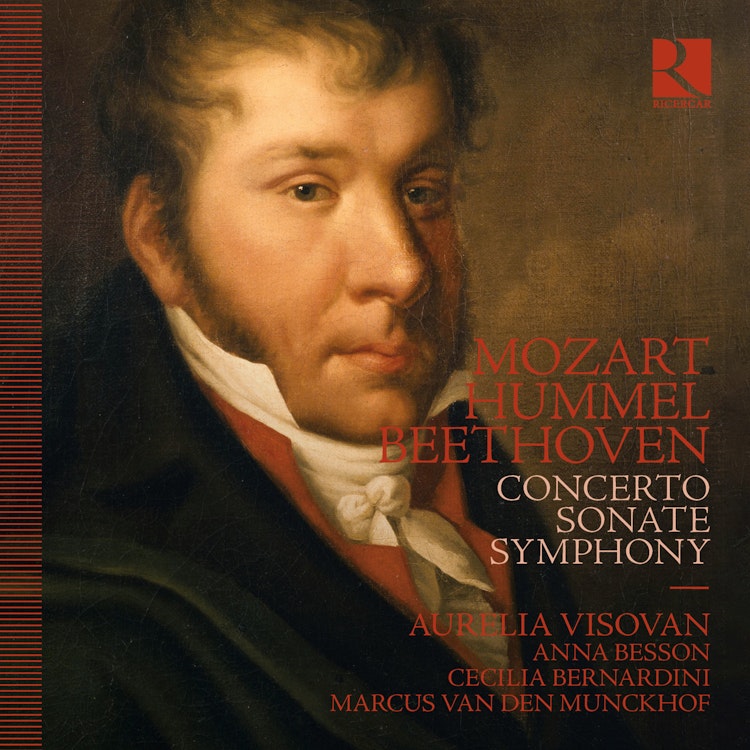
Johann Nepomuk Hummel, a pianist-composer of the early Romantic period, was a child prodigy who became a pupil of Mozart in 1786 and later served as Konzertmeister for Prince Esterházy.
Recording & Production
This recording is a result of a partnership between Outhere Music and the International Competition Musica Antiqua in Bruges, Belgium, featuring Aurélia Visovan, the 2019 first prize winner.
Compositional Technique
Hummel's arrangement of Mozart's Piano Concerto No. 24 extensively rewrites the solo piano part, accentuating its virtuosity and broadening its range, sometimes an octave higher than Mozart's original.
Compositional Technique
Hummel's arrangements of orchestral works by Mozart and Beethoven for chamber ensemble were important for economic reasons, as they sold well and provided revenue for both arranger and publisher.
Historical Context
In an era before sound recordings and widespread orchestras, chamber arrangements were often the only way for the public to experience and appreciate orchestral works.
Instruments
The pianoforte used in this recording was made by Conrad Graf in Vienna in 1835, who is considered the greatest fortepiano maker of his time.
Composer's Artistic Vision
Hummel's compositions, particularly his Sonata No. 3 in F minor, Op. 20, fuse the contrasting principles of constraint and freedom, tradition and innovation, central to Romanticism.
You might also enjoy...
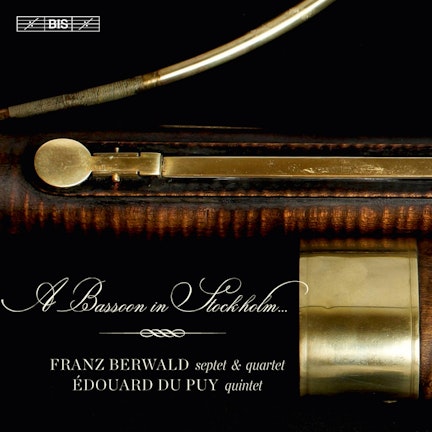
A Bassoon in Stockholm...
Danzi: Quartets, Op. 40, Nos. 1-3
Clarinet Trios: Gyrowetz, Volckmar, Ries
Haydn: Baryton Trios, Cassation and Quintet
Fugues for String Quartet
A Suo Amico: Music from the repertoire of Domenico Dragonetti and Robert Lindley
Galilei: Intavolatura di liuto
Early Romantic Piano Quartets by Hummel, Ries & Schubert
Lessel: Works for Pianoforte
Myers: Cavatina - slowed + reverb + rain
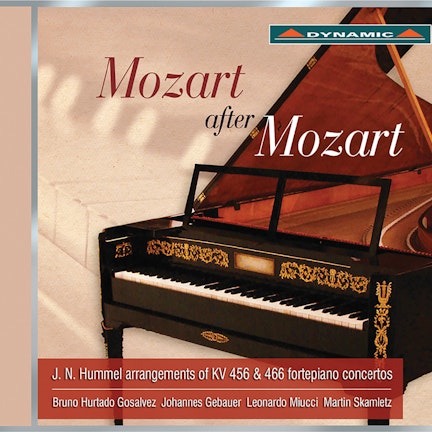
Mozart after Mozart (Arr. J.N. Hummel)
Mozart, Vesperæ solennes de confessore, K. 339: V. Laudate Dominum
Mozart: Don Giovanni, K. 527 (Arr. Triebensee for Wind Ensemble)
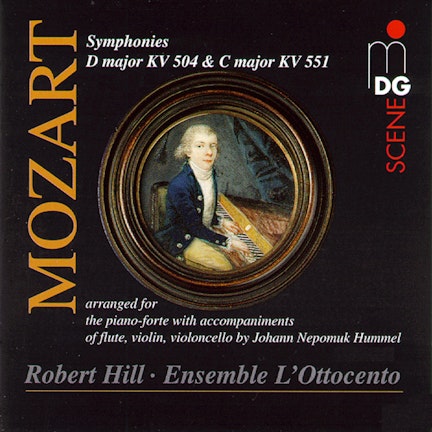
Mozart: Symphonies K. 504 & K. 551 (Arranged by Johann Nepomuk Hummel)