Mozart's Prelude and Fugue, K.394, was sent to his sister in a letter where he expressed excitement about discovering the fugal works of Bach and Handel.
Performer Biography
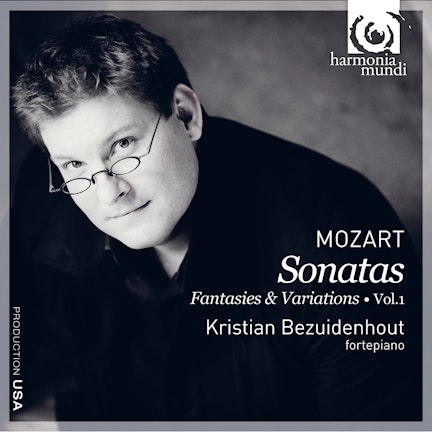
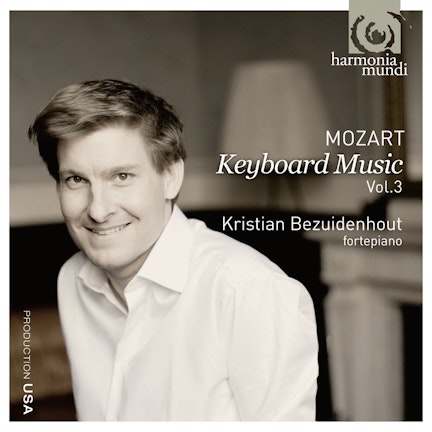
Kristian Bezuidenhout, the fortepiano soloist, won first prize and the audience prize at the prestigious Bruges Fortepiano Competition at age 21.
Composer Biography
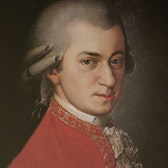
As a child, Wolfgang Amadeus Mozart was known for his ability to improvise on the harpsichord, even with a handkerchief covering his hands.
Composition History
The D minor Fantasia, K.397, is incomplete in its earliest known print, with the final bars added by August Eberhard Müller in a later edition.
Historical Context
Mozart may have encountered the fortepiano for the first time in Munich in 1774-75, as there is no evidence of fortepianos in his native Salzburg before 1780.
Compositional Technique
The G major Sonata, K.283, shows Mozart's early understanding of the fortepiano's expressive potential, with its autograph manuscript containing many dynamic markings.
Instruments
The fortepiano used in this recording was made by Paul McNulty in 2009, modeled after an 1805 instrument by Anton Walter & Sohn, Vienna.
You might also enjoy...
Mozart: Keyboard Music Vol.4
Mozart: Anne Queffélec
Peter Serkin Plays Mozart
Mozart: Piano Works
Mozart Matures
Mozart: Fantasie C-Moll, K. 475 / Klaviersonate No. 14 / Zehn Variationen, K. 455 / Menuett D-Dur / Klaviersonate No. 16
Mozart: Selected Piano Works
Mozart: Keyboard Music Vol. 1
Haydn: Sonata in F Major - Mozart: Nine Variations on a Menuett by Duport, Fantasia in C Minor & Sonata in C Minor
Mozart: Sturm und Drang
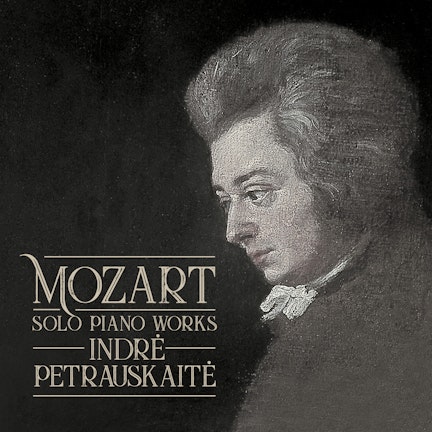
Mozart: Solo Piano Works
A Tribute to Mozart: Fantasias, Rondos, Allegros, an Adagio and Andante