In 1781, Mozart left his employment in Salzburg to become a freelance composer in Vienna, a move he found stimulating despite being fired.
Critical Reception
The D minor concerto (No. 20, K 466) initially received a lukewarm response from the Viennese but eventually became Mozart's most frequently performed concerto.
Composition History
Mozart's move to Vienna and his success as a freelance composer were significantly aided by the popularity of the piano, an instrument he heavily utilized.
Compositional Technique
In his 1785 concertos, Mozart innovated by having the soloist enter with music and temperament entirely different from the orchestra's initial exposition.
Instruments
The Concerto in E-flat major (No. 22, K 482) marks the first time clarinets were used in a Mozart concerto, contributing to its distinctive wind quintet sound.
Composition History
Mozart composed the Concerto in E-flat major (No. 22, K 482) while deeply engrossed in writing his opera The Marriage of Figaro, leading to some incomplete passages in the concerto's manuscript.
Composer's Artistic Vision
Mozart's piano concertos from 1785, including those on this album, moved beyond surface entertainment to reflect more deeply on life, love, and laughter.
You might also enjoy...
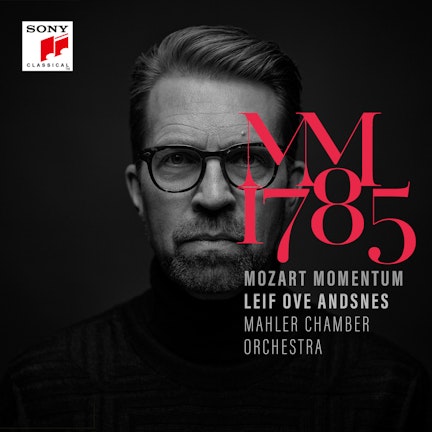
Mozart Momentum - 1785
Mozart: Symphony No. 14, K. 114; Three Piano Concertos after J.C. Bach, K. 107
Mozart 225: Complete Concertos
Mozart: Concertos
Mozart & Beethoven: Works
Mozart: Piano Concertos, Vol. 10
Hummel: Piano Concertos / Variations in F Major
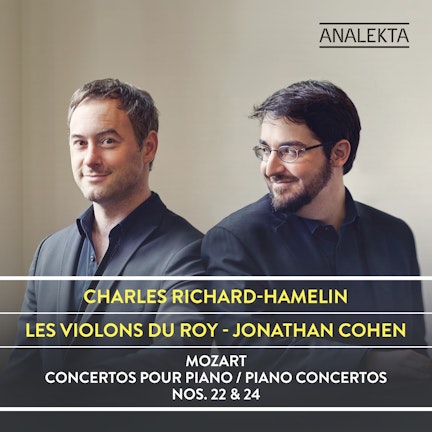
Mozart: Piano Concertos Nos. 22 & 24
Mozart: Piano Concertos K. 467, 488, 595; Masonic Funeral Music, K. 477; Symphony In G Minor, K. 550