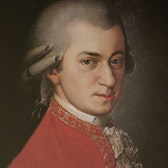
Mozart was in financial need during this period, having no official appointment, and relied on giving concerts to earn money, as evidenced by a letter to his Viennese publisher Hoffmeister pleading for funds.
Composition History
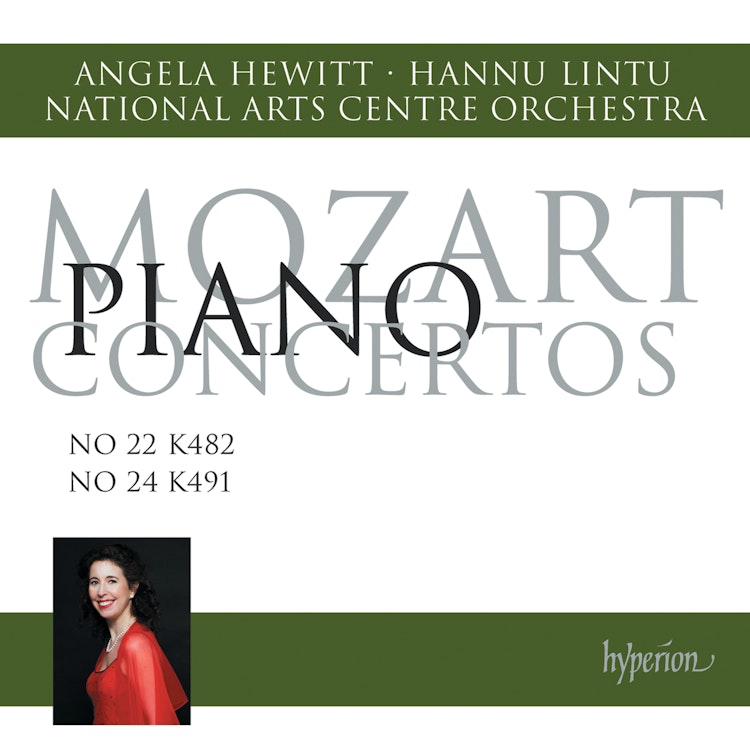
Mozart composed three piano concertos, including the two on this recording, in a span of four months between December 1785 and March 1786, while also working on his opera The Marriage of Figaro.
Compositional Technique
Piano Concerto No 24, K491, is unique among Mozart's piano concertos for its large orchestra, including both oboes and clarinets, and its autograph manuscript shows signs of Mozart's unrest, with numerous revisions and even self-portraits.
Composer Biography
The premiere of Piano Concerto No 24, K491, in April 1786, was Mozart's last major public appearance as a soloist.
Compositional Technique
Piano Concerto No 22, K482, marks the first time Mozart used clarinets in his piano concertos, an instrument he admired after hearing them in Mannheim in 1778.
Notable Performances
At one of its first major performances, the second movement of Piano Concerto No 22, K482, was so well-received by the audience that it had to be encored.
Critical Reception
Upon hearing Mozart's Piano Concerto No 24, K491, Beethoven reportedly exclaimed to his friend Cramer, 'Ah, we shall never be able to do anything like that!'
You might also enjoy...
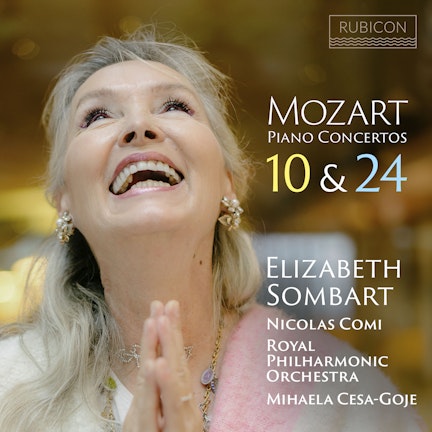
Mozart: Piano Concertos 10 & 24
Mozart: Piano Concertos Nos. 9 "Jeunehomme" & 21 "Elvira Madigan"