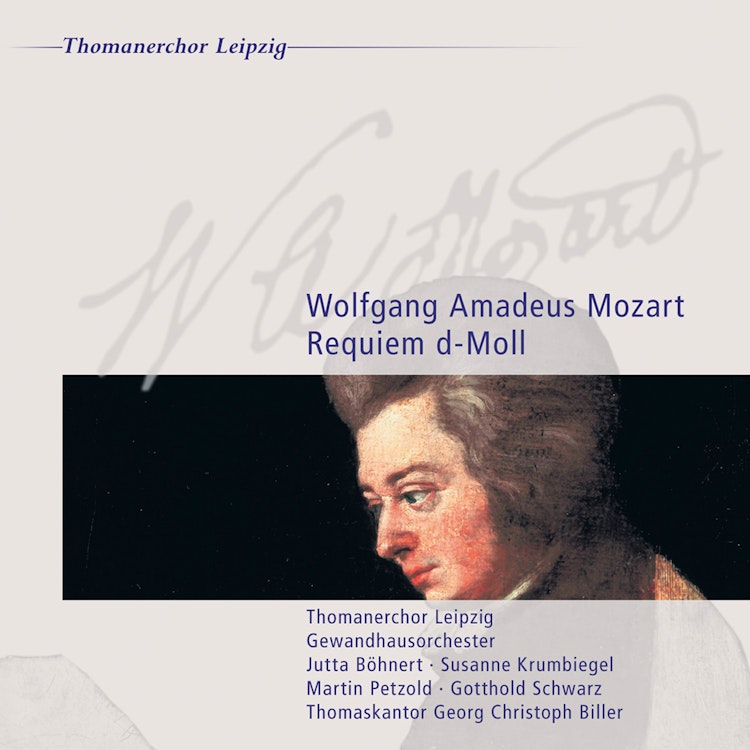
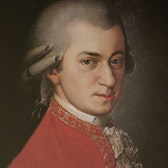
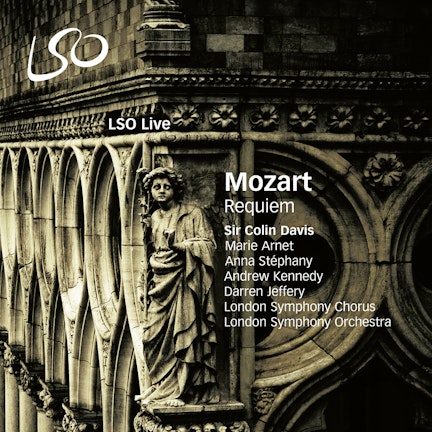
Mozart's Requiem, cataloged as KV 626, is considered by some to be his final masterpiece, while others view it as a controversial case of musical deception.
Composer's Artistic Vision
Mozart's Requiem integrates historical stylistic elements, particularly Baroque counterpoint influenced by George Frideric Handel and Johann Sebastian Bach, into a unique and modern musical language.
Critical Reception
The co-authorship of Süßmayr in Mozart's Requiem became known in 1800, leading to criticism of his contributions that continued for two centuries, including harsh verdicts from Johannes Brahms and Richard Strauss.
Composition History
Franz Xaver Süßmayr, Mozart's student and collaborator, completed the Requiem in 1792 after Mozart's death, based on Mozart's plans and sketches.
Recording & Production
This recording uses the Franz Beyer edition of the Requiem, which corrects Süßmayr's musical errors and refines his orchestration, aiming to incorporate as much of Mozart's idiom as possible.
Performer Biography
The Gewandhausorchester, also featured on this album, has a history spanning over 250 years and has premiered many world-renowned works, including Beethoven's 5th Piano Concerto and his complete symphonies.
Performer Biography
The Thomanerchor Leipzig, featured on this album, is nearly 800 years old, making it Leipzig's oldest cultural institution.
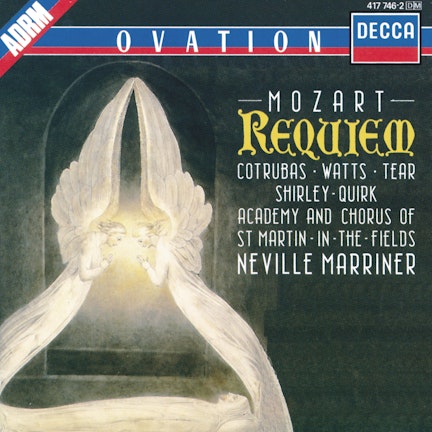
You might also enjoy...
Mozart: Requiem
Mozart: Requiem in D Minor, K. 626 "Missa pro defunctis"
Mozart: Requiem
Mozart: Requiem
Mozart, W.A.: Requiem
Mozart: Requiem in D Minor, K. 626 (Live)
Mozart: Requiem
Mozart: Requiem
Mozart: Requiem in D Minor
Wolfgang Amadeus Mozart: Great Mass in C Minor & Requiem in D Minor
W.A. Mozart: Mass in C Minor, K. 427 "Great Mass"; Requiem, K. 626