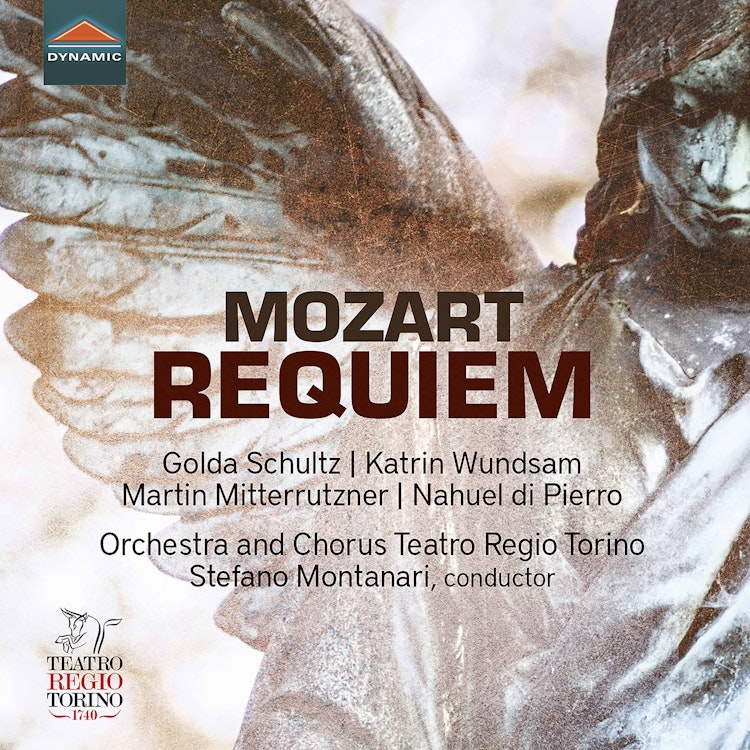
Mozart: Requiem in D Minor, K. 626 "Missa pro defunctis"
1/21/2022, 14 Tracks, 43:26
Featuring
Golda Schultz
Katrin Wundsam
Martin Mitterrutzner
Nahuel di Pierro
Stefano Montanari
Coro del Teatro Regio Torino
Orchestra Teatro Regio Torino
Wolfgang Amadeus Mozart
Did you know?
1/7
Compositional Technique
Mozart's Requiem is considered a radically new work for its genre, opening the path for later composers like Cherubini, Berlioz, and Verdi due to its powerful dramatic subjectivism.
Composition History
At the time of his death, Mozart had only completed and orchestrated the Introitus of the Requiem, with other sections existing as detailed drafts or sketches.
Compositional Technique
The Requiem features a unique blend of tone-colors, with the woodwind family entirely represented by two bassoons and two basset horns.
Composition History
Mozart's Requiem was commissioned anonymously in July 1791 by Count Franz von Walsegg, who intended to pass it off as his own work to honor his deceased wife.
Composition History
Franz Xaver Süssmayr, a pupil of Mozart, completed the Requiem and even signed the finished work, imitating Mozart's signature, creating an "authentic forgery."
Composition History
Mozart's wife, Constanze, arranged for his pupils, primarily Franz Xaver Süssmayr, to complete the Requiem to avoid losing the agreed compensation.
Composer Biography
Mozart was suffering from a rheumatic illness and dark delusions of persecution, believing he had been poisoned and was writing the Requiem for his own funeral, shortly before his death.
You might also enjoy...
Mozart: Requiem
Mozart: Requiem
Mozart: Requiem
Mozart: Requiem in D Minor, K. 626
Mozart, W.A.: Requiem
Mozart: Requiem in D Minor, K. 626 (Live)
Mozart: Requiem
Mozart: Requiem
Mozart: Requiem in D Minor
Wolfgang Amadeus Mozart: Great Mass in C Minor & Requiem in D Minor
W.A. Mozart: Mass in C Minor, K. 427 "Great Mass"; Requiem, K. 626