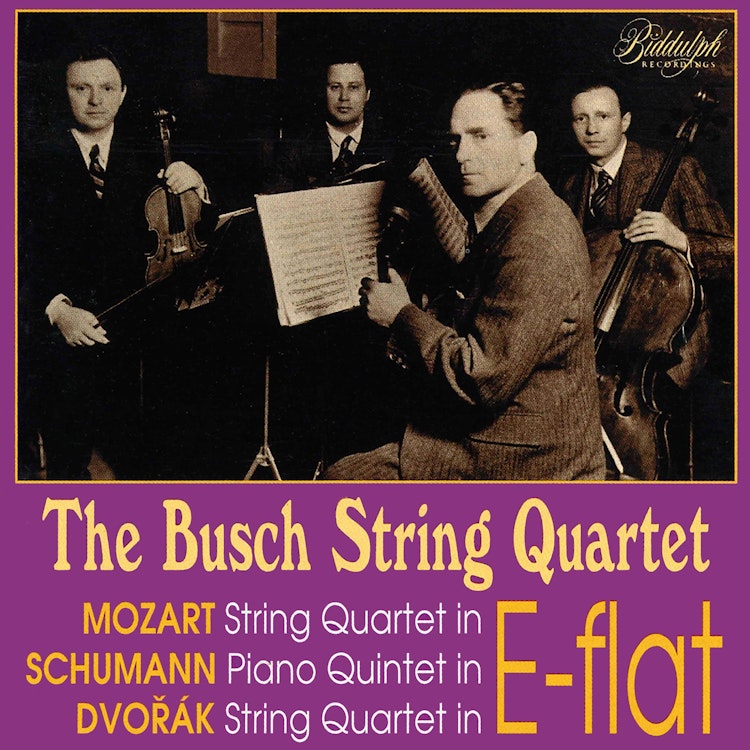
After reassembling in America, the Busch Quartet secured a recording contract with Columbia, leading to sessions in 1941 and 1942.
Interpretation
Adolf Busch, the leader of the Busch Quartet, was known for his perceptive interpretations of Schumann, with his readings of the composer's violin sonatas considered among his finest.
Historical Context
The American Federation of Musicians' recording ban in 1942 prevented the Busch Quartet's celebrated line-up from producing further records for posterity.
Interpretation
Busch's Dvořák interpretations were informed by his studies of Czech rhythms with Bedrich Dlabac, secretary of the Gesellschaft der Musikfreunde, and were enthusiastically received in Prague.
Interpretation
Adolf Busch's interpretations of Dvořák were influenced by his violinistic inheritance from Joachim and Hubay, allowing him to bring out the 'gypsy element' in Brahms and a similar brio in Dvořák's works.
Performer Biography
During their emigration to the US, members of the Busch Quartet narrowly escaped death when their pilot overshot the runway and later when their ship was almost torpedoed by a German U-boat.
Performer Biography
The Busch Quartet, a renowned string quartet, faced significant challenges emigrating to the United States during World War II, including two members being denied passage from Fascist Italy due to being Jewish.