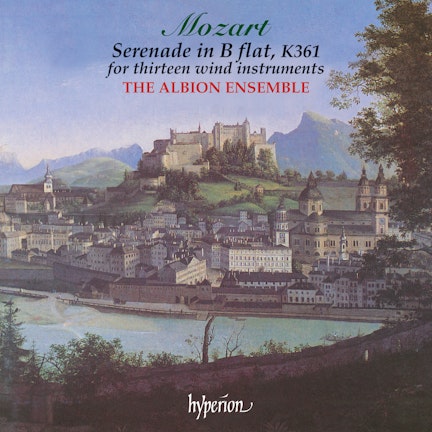
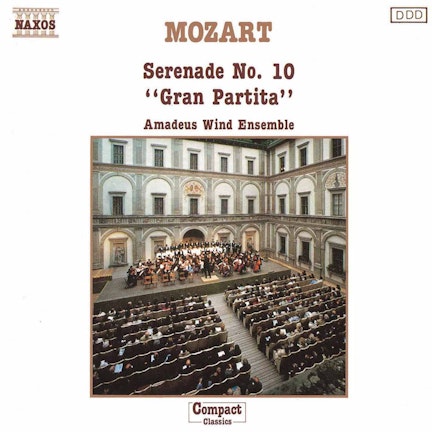
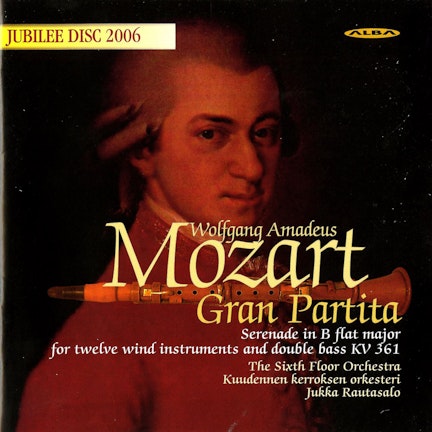
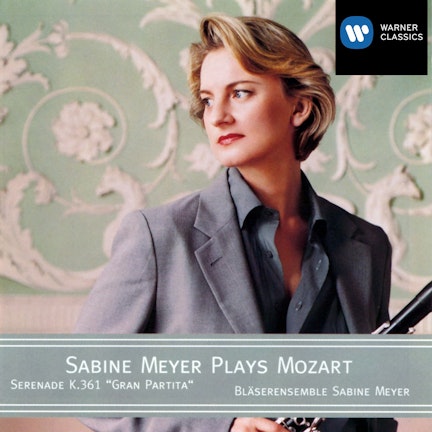
The Serenade No. 10 is Mozart's longest wind-band piece, with a sprawling seven-movement structure that includes two minuets, a romance, and a set of variations.
Recording & Production
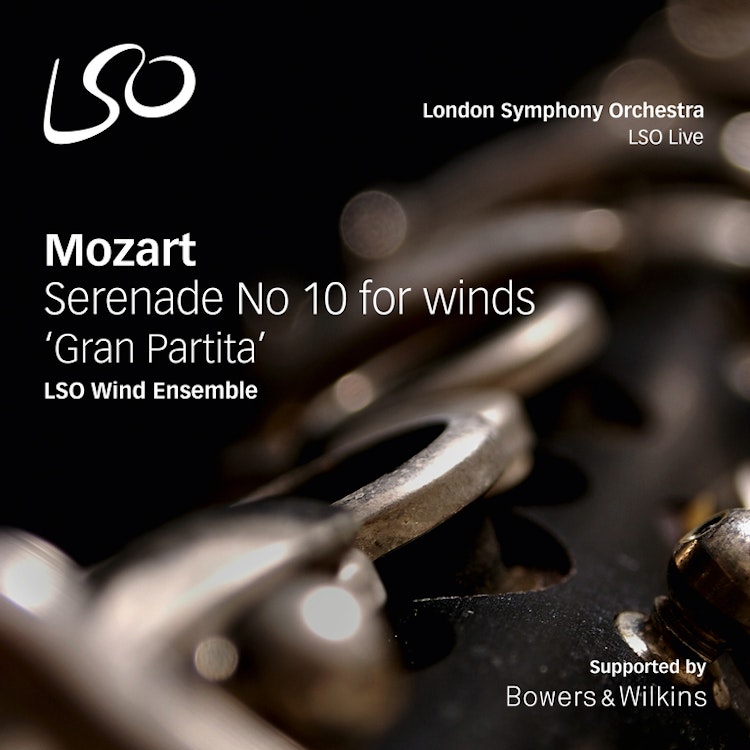
This recording of Mozart's Serenade No. 10 was made live in DSD 128fs on October 31, 2015, at LSO St Luke's, London.
Instruments
The basset-horn, a mellow, deep-voiced alto clarinet, was used by Mozart in this serenade and later in his Masonic Funeral Music and Requiem for sombre effects.
Compositional Technique
The Serenade No. 10 features an unusually rich ensemble for its time, with four horns, two oboes, two bassoons, two clarinets, two basset-horns, and a double bass.
Composer's Artistic Vision
Mozart had a deep affinity for wind instruments and their players, which began with his experience of the Mannheim court orchestra in 1777.
Composition History
Mozart's Serenade No. 10, 'Gran Partita', was first performed at a benefit concert for clarinettists Anton and Johann Stadler in Vienna's National Theatre.
Cultural Impact
The playwright Peter Shaffer chose the Adagio movement from this serenade for a pivotal scene in his play Amadeus, where it leads Salieri to realize Mozart's unique greatness.
You might also enjoy...
Mozart: Serenade in B-flat Major, K.361 (370a) "Gran Partita"
Gran Partita
Mozart: Serenade K.361 "Gran Partita"
Mozart: Serenade, K. 361 "Gran partita"
Mozart: Gran Partita
Wolfgang Amadeus Mozart: Serenade in C Minor, K.388
Mozart: Gran Partita, Sérénade No. 12 "Nacht Musique" K. 388
Mozart: Serenade in B-Flat, K. 361 "Gran Partita"
Mozart: Serenade No. 10 in B-Flat Major, K. 361 "Gran Partita"
Mozart: Serenade No. 10 in B-Flat Major, K. 361, "Gran Partita"
Mozart: Serenade No.10, "Gran partita"
Mozart: Serenade No. 10 in B-Flat Major, K. 361 "Gran Partita"
Mozart : Serenade No.10 in B flat major, 'Gran Partita'