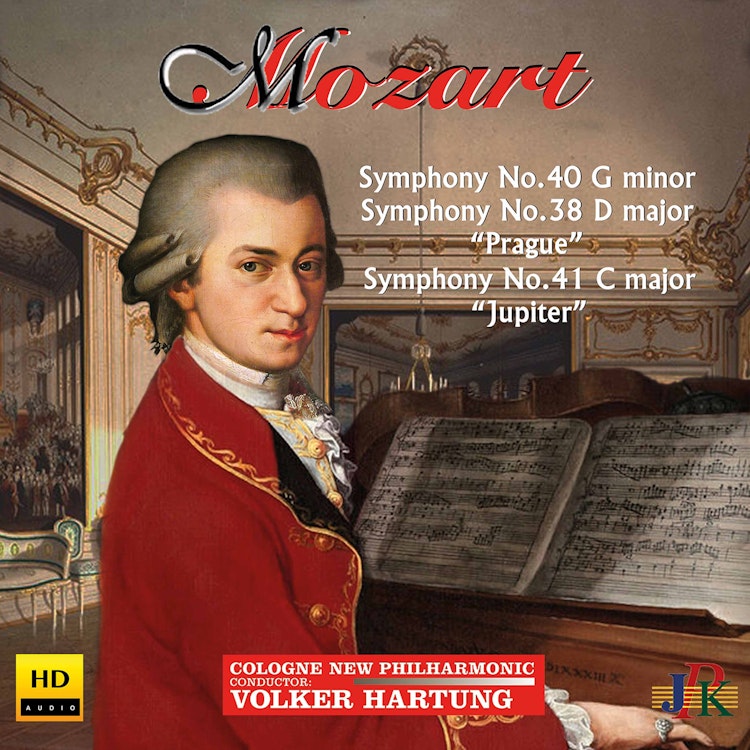
Mozart's Symphony in G minor K 550 was completed on July 25, 1788, during an exceptionally productive period that also saw the creation of his 39th and 41st Symphonies.
Cultural Impact
Mozart's Symphony in G minor K 550 inspired many contemporaries and followers, with Beethoven using a similar theme in his Fifth Symphony's final movement.
Critical Reception
The 40th Symphony had an unsatisfactory performance during Mozart's lifetime, causing him to leave the room in despair.
Composer's Artistic Vision
Mozart described his affection for the Czech musicians of the Prague Theatre Orchestra, for whom he wrote his Symphony in D major, by saying, 'My Orchestra is in Prague'.
Compositional Technique
The fourth movement of Mozart's Symphony in G minor K 550 begins with a 'Mannheim rocket,' a series of fast-rising notes sketching the tonic triad.
Compositional Technique
The 'Jupiter' Symphony's most important characteristic is the five-voice fugato in its fourth movement, which combines five motifs in a genial fashion.
Compositional Technique
Mozart revised his Symphony in G minor K 550, adding two clarinets and rewriting flute and oboe parts to match the new sound.
You might also enjoy...
Richter & Kohout: Works for Orchestra
Johann Christoph Friedrich Bach: Symphonies Nos. 1-4
Haydn 2032, Vol. 11: Au goût parisien
Fricsay conducts Mozart
Beethoven: Symphonies 1-9
Brahms: Symphonies Nos. 1, 2, 3 & 4
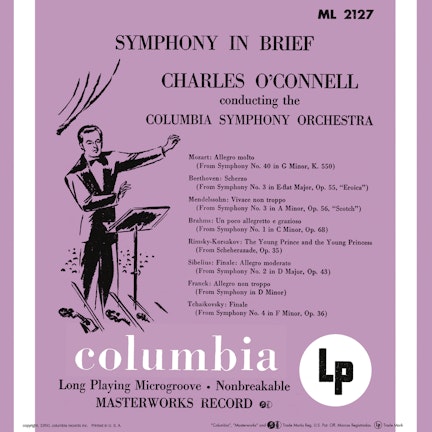
Symphony in Brief - Charles O'Connell Conducting the Columbia Symphony Ochestra
Mozart: Symphonies Nos. 38 & 39
Pieter Van Maldere: Sinfonie
Symphonies Nos. 5, 6, 7 & 8
Mozart: Le Nozze di Figaro (Overture), Symphony No. 40 - Joseph Haydn: Symphonies Nos. 88 & 94