Regina Strinasacchi, the violinist for whom Mozart wrote KV 454, was one of many outstanding female musicians trained at the famous Ospedale della Pietà in Venice, where Vivaldi once taught.
Composer Biography
Mozart's sonatas for piano and violin span almost his entire career, from his first compositions at age seven to his final work of this type in 1788.
Compositional Technique
With his Opus 1, Mozart created a new vision for the piano and violin sonata genre, elevating the violin from a mere accessory to an almost equal partner with the piano.
Recording & Production
The album was recorded in March 2021 at the Fazioli Concert Hall in Sacile, Italy, using a Fazioli Concert Grand Piano (F 278 n. 1335 'Mago Merlino').
Composition History
Mozart composed the Sonata in B flat major, KV 454, for a performance in Vienna in 1784, where he played the piano and the Italian virtuoso Regina Strinasacchi played the violin.
Performer Biography
Francesca Dego, the violinist on this album, was the first Italian female prize-winner in nearly 50 years at the prestigious Premio Paganini in Genoa.
Composition History
The first three sonatas on this album (KV 301, 303, and 305) were published in Paris in 1778 as Mozart's Opus 1, written during his travels to Mannheim and Paris.
You might also enjoy...
Mozart Complete Sonatas & Variations for Piano & Violin
Mozart: The Violin Sonatas, Vol.3
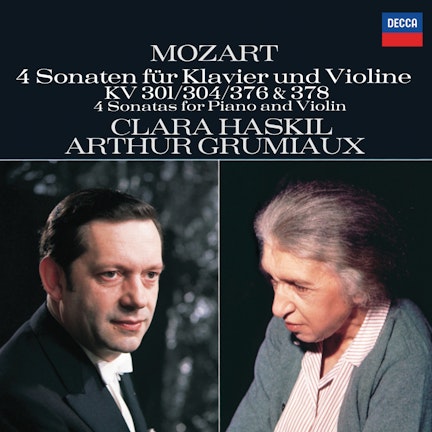
Mozart: 4 Violin Sonatas for Piano and Violin, Nos.18, 21, 24 & 26
Mozart : Violin Sonatas Nos 18 - 21, 32, 33, 35
Mozart: Sonate Per Pianoforte E Violino K. 296, K. 301, K. 303, K. 306
Mozart: Sonate Per Pianoforte E Violino K. 296, 301, 303, 306