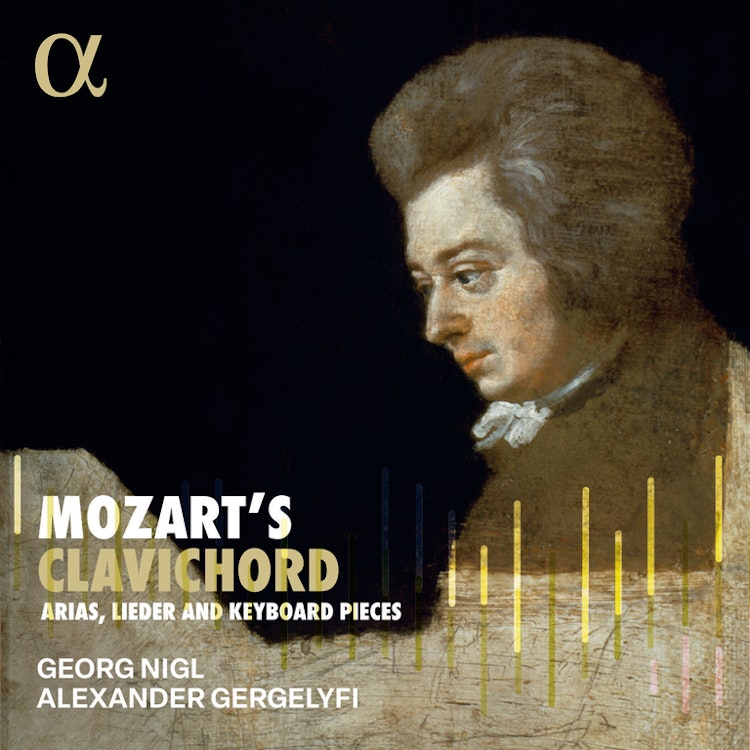
The clavichord was ideal for Mozart to compose in a home environment, as evidenced by ink blots on its cover and a note from his widow inside.
Recording & Production
This album was recorded on Wolfgang Amadé Mozart's personal clavichord at his birthplace in Salzburg.
Composer Biography
Mozart was familiar with the clavichord from a young age, as his father acquired one made by Johann Andreas Stein when Mozart was seven years old.
Instruments
Despite its historical importance, the clavichord is rarely featured in concerts or recordings today because its sound is too quiet for large venues.
Instruments
Mozart's widow, Constanze, certified that he composed "Die Zauberflöte", "La Clemenza di Tito", the "Requiem", and a Freemasons' Cantata on this clavichord.
Compositional Technique
A unique feature of the clavichord is its ability to produce a vibrato sound, known as 'Bebung' or 'Zittern' in German, by gently altering finger pressure on the keys.
Instruments
Mozart's clavichord, though visually simple, is considered one of the most important objects in music history and is preserved by the International Mozarteum Foundation in Salzburg.
You might also enjoy...
The Complete Songs Of Virgil Thomson for voice and piano
Songplay
Korngold: Songs, Vol. 2
Haydn, J. / The Earl Of Abingdon: Songs and Chamber Music
The Voice of Alfred Deller
Bésame Mucho
Marian Anderson Sings Schubert & Schumann Songs
Grace Williams: Songs
Elizabethan And Jacobean Ayres, Madrigals And Dances
Shostakovich, D.: Songs (Complete), Vol. 1 - Vocal Cycles of the Fifties (1950-1956)