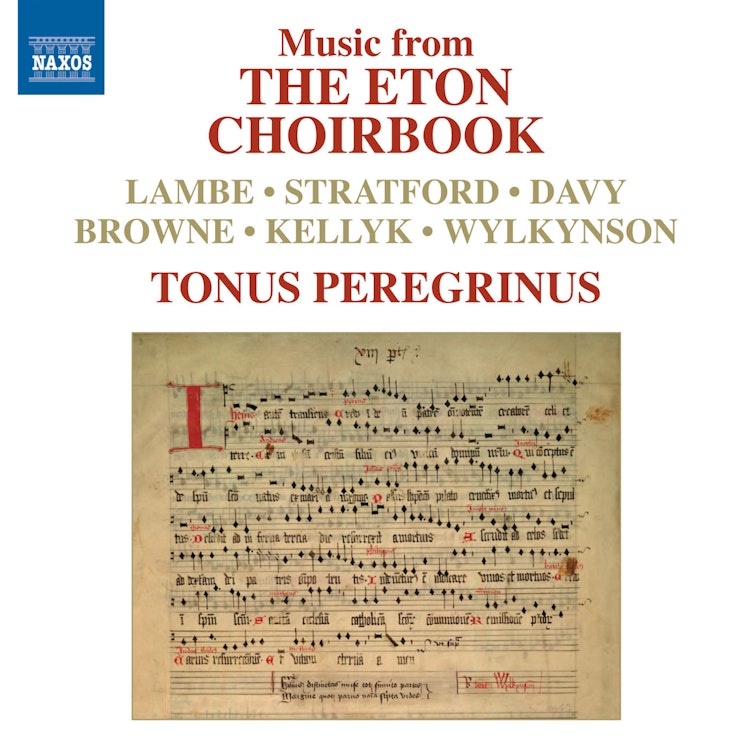
The Eton Choirbook's music was inscribed on large parchment pages with 2cm high staves, using 'black-full' notation, which survived longer in England than on the Continent.
Recording & Production
This recording uses experimental microphones designed to provide enhanced dynamic resolution in the frequency range our ears are most sensitive to, aiming to reduce non-harmonic distortion.
Historical Context
The Eton Choirbook is a giant manuscript from Eton College Chapel, considered one of the greatest surviving glories of pre-Reformation England.
Composition History
Creating the Eton Choirbook was a significant undertaking, requiring the skins of 112 average-sized calves and costing roughly an entire annual salary.
Performer Biography
TONUS PEREGRINUS, founded by composer Antony Pitts, has achieved major successes in both new and early music, including a Cannes Classical Award for their debut release of Arvo Pärt's Passio.
Composition History
The Eton Choirbook was compiled around 1500, during the rule of Henry VII, who had claimed the monarchy for the Tudors in 1485.
Compositional Technique
Red ink in the Eton Choirbook conveyed performance instructions, with red text indicating reduced voices and red noteheads introducing binary 'imperfection' in rhythmic proportions.
You might also enjoy...
Cornysh, Turges, Prentes: Latin Church Music
In Paradisum - Music Of Victoria And Palestrina
Haven
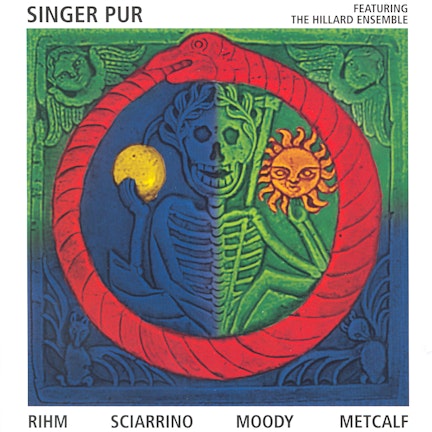
Rihm / Sciarrino / Moody / Metcalf: Choral Works
Christmas in Spain & Mexico
The Toledo Summit - Early 16th Century Spanish & Flemish Songs & Motets