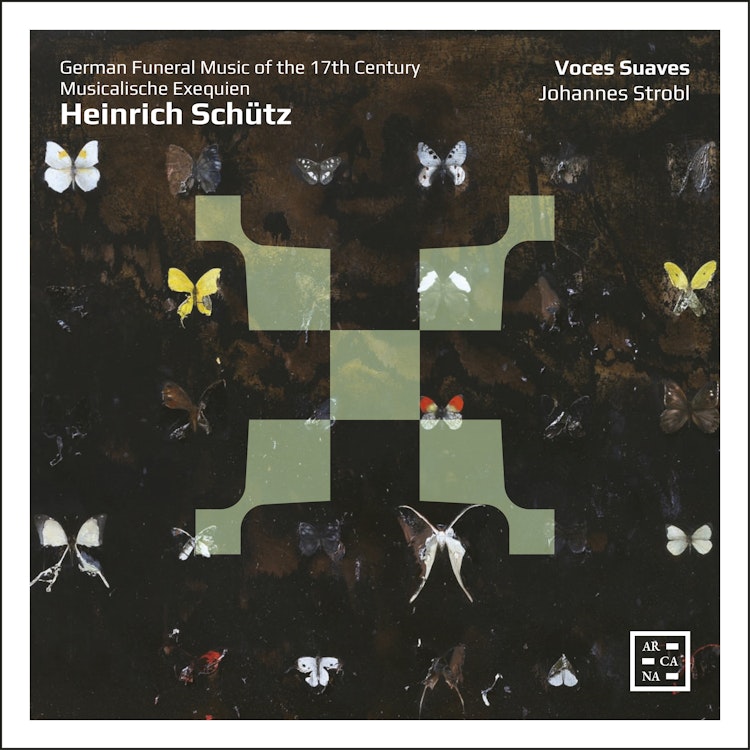
Musicalische Exequien: German Funeral Music of the 17th Century
2/12/2021, 10 Tracks, 1:05:56
Featuring
Johannes Strobl
Tore Eketorp
Maria Ferré
Orí Harmelin
Voces Suaves
Johann Hermann Schein
Andreas Gleich
Sebastian Knüpfer
Heinrich Schütz
Johann Schelle
Johann Georg Ebeling
Johannes Kessel
Johann Rosenmüller
Did you know?
1/7
Critical Reception
Schütz's Musikalische Exequien is considered the most intimate and impressive funeral composition of the early modern period due to its complex simplicity and poignant tonal language.
Composition History
Heinrich Schütz's Musikalische Exequien were composed for the funeral of Henry II, Count of Reuss-Gera, in 1636, following the Count's specific instructions for the texts.
Composer Biography
Cosimo Stawiarski, a musicologist and Baroque violinist, founded Edition Musica Poetica in 2003 to publish unknown 17th- and 18th-century sacred vocal music.
Composer's Artistic Vision
Schütz added a second choir to the Canticle of Simeon (part 3) of Musikalische Exequien to represent the joy of blessed souls in heaven, an aesthetic-dramatic choice.
Compositional Technique
For the first part of Musikalische Exequien, Schütz used alternating solo and tutti passages, setting Bible quotations for soloists and song verses for the choir, to address the heterogeneous text.
Historical Context
Occasional prints from the 17th century, especially funeral sermons, provide detailed information about life and socio-cultural context in the early modern period.
Composition History
Many 17th-century funeral music compositions are lost because they were often tailored to specific occasions and not widely printed.