A large portion of Heinrich Schütz's musical output was composed during the Thirty Years' War (1618-1648), a period of religious conflicts, famines, and epidemics in Europe.
Instruments
The tuning pitch for this recording is a = 465 Hz, a half-step higher than the modern standard for historical performances, corresponding to organ tuning in Schütz's time.
Performer Biography
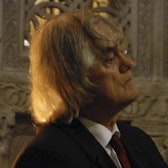
Sigiswald Kuijken, the director of La Petite Bande, introduced a historically authentic style of playing the Baroque violin in 1969, holding the instrument on or under the collarbone.
Composer Biography
Heinrich Schütz was appointed court Kapellmeister of the Electoral Prince of Saxony in Dresden in 1617, a position he held for the rest of his life, with brief interruptions due to war.
Interpretation
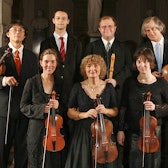
This recording uses a soloistic ensemble for greater transparency, with only a violone and organ for basso continuo, as Schütz did not demand more instrumental participation for the Exequien.
Composition History
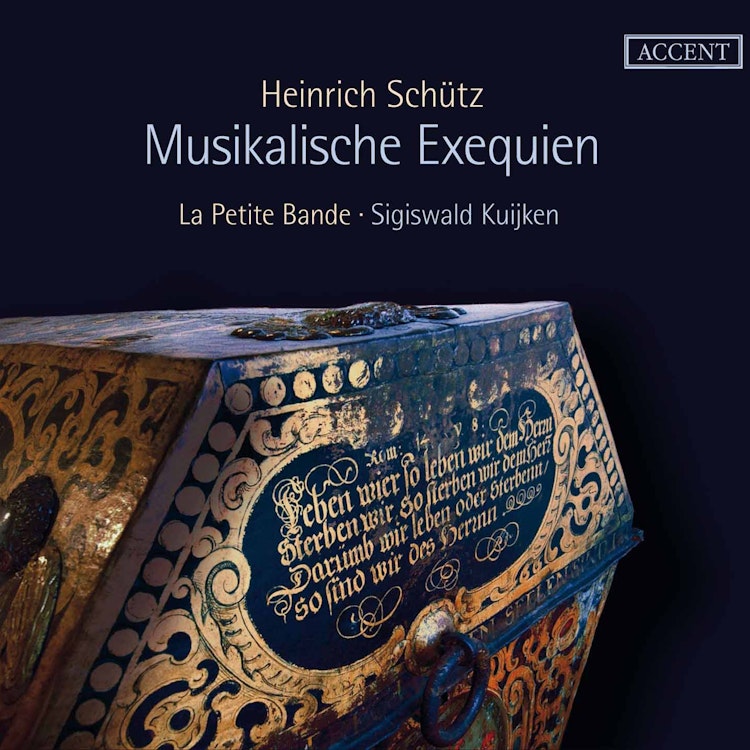
Schütz composed the Musikalische Exequien as funeral music for Prince Heinrich II Posthumus Reuss, using biblical passages the Prince had selected for his own copper coffin.
Compositional Technique
The Musikalische Exequien is a work of outstanding artistic maturity, where Schütz creates musical wonders despite being limited to six to eight voices and a basso continuo accompaniment.
You might also enjoy...
Monteverdi: Vespro della Beata Vergine
Cavalli: Vespero della Beata Vergina Maria a 8 voci
Schütz: Schütz Edition, Vol. IV
Handel: Alexander's Feast
J.S. Bach: Christmas Oratorio
Campra: Requiem & Miserere
Stabat Mater (Inspiration)
Lully: Dies Irae (Collection Grands motets, Vol. 1)
Voices of Bach
Schütz: Choral music for Christmas
Handel : Dixit Dominus & Zadok the Priest
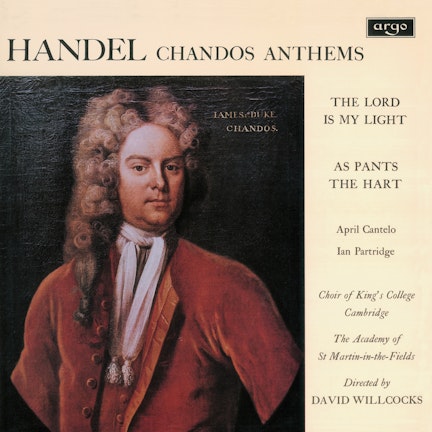
Handel: Chandos Anthems - The Lord Is My Light; As Pants the Hart