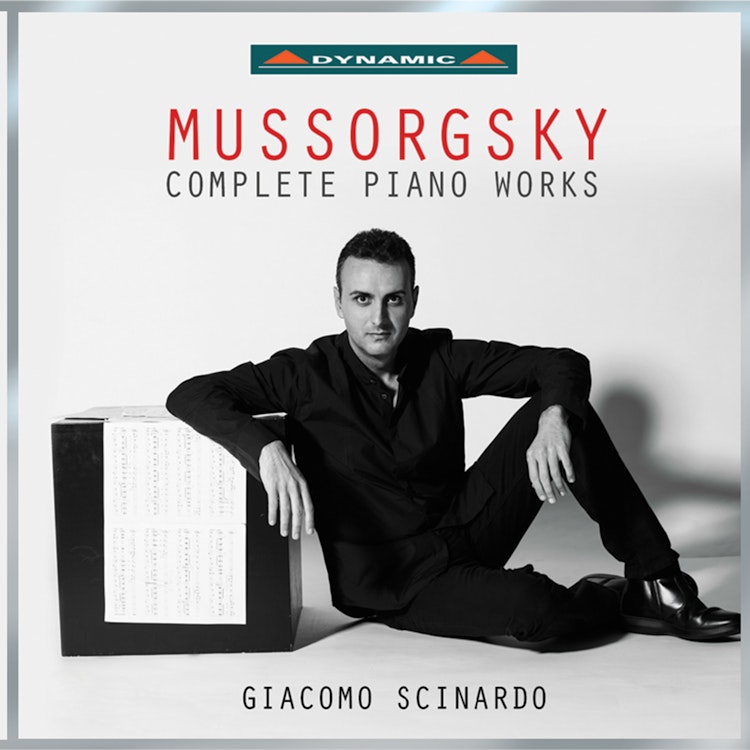
Mussorgsky was actively involved in the Free Music School, which aimed to assert Russian national identity in music, in contrast to the Germanophile Russian Music Society.
Compositional Technique
Mussorgsky's piano writing is considered unconventional, with some performers describing it as 'non-piano writing,' as it prioritizes emotional communication over traditional virtuosity.
Composer's Artistic Vision
Mussorgsky's mature piano works aim to communicate his intimate thoughts and emotions, rather than just the events that caused them, using titles as guides for the listener.
Historical Context
Mussorgsky was part of the 'Group of Five' (also known as the 'Balakirev Circle'), a group of Russian musicians dedicated to asserting national identity in music.
Critical Reception
After Mussorgsky's death, his friend Rimsky-Korsakov completed, corrected, and orchestrated many of his works, which helped them gain international recognition, though these revisions later faced criticism for altering the composer's original ideas.
Composition History
Mussorgsky's first opportunity to perform outside St. Petersburg, touring with singer Leonova, inspired him to compose several pieces, including 'On the Southern Shore of the Crimea' and 'Au Village'.
Composer Biography
Modest Petrovich Mussorgsky, the composer, was already an accomplished pianist at age seven, capable of playing some of Liszt's works.
You might also enjoy...
Russian Piano Music
Femmes de Légende
Harsányi: Complete Piano Works, Vol. 3
Brahms: The Complete Piano Transcriptions
Charles Wuorinen: A Tribute - Music by Wuorinen & J.S. Bach
Hola Espana: Klaviermusik aus Spanien
Perpetuum
Shostakovich and Pupils, Vol. 2: Weinberg, Sviridov, Bunin
Piano Recital: Corbett-Jones, William - Nixon, R. / Ravel, M. / Bartok, B. / Busoni, F. / Schubert, F.