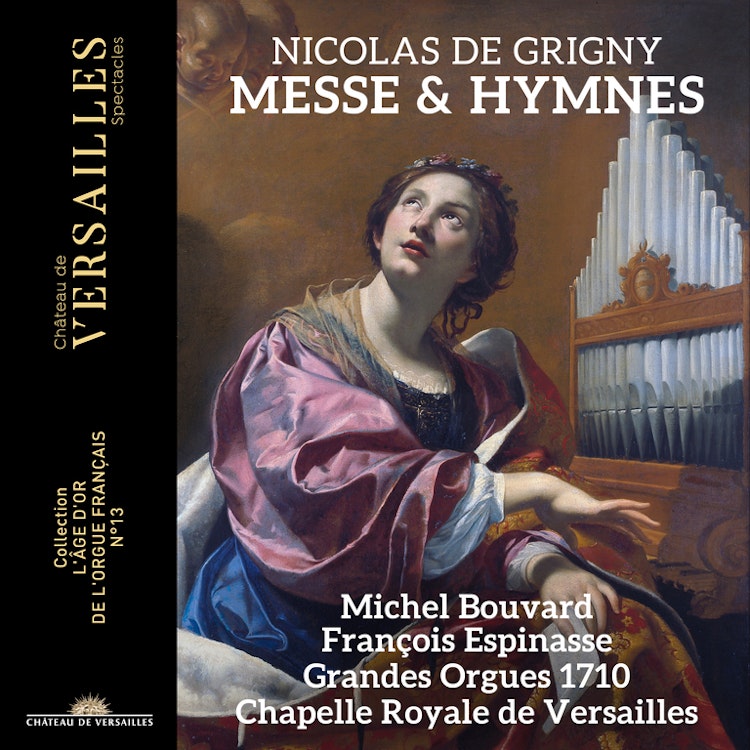
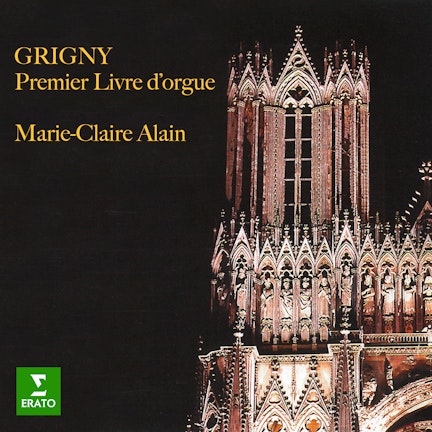
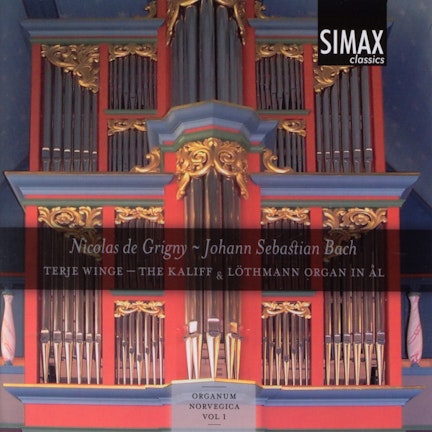
During Nicolas de Grigny's time at Saint-Denis Abbey, Mass was sometimes sung entirely in Greek on solemn feast days, or at least the Epistle and Gospel, a custom also found in Rome, Venice, and Florence.
Composer Biography
Nicolas de Grigny, the composer, came from a family of many musicians, including his father, great-uncle, and two uncles, all of whom were organists.
Composer Biography
Nicolas de Grigny was a pupil of Nicolas Lebègue, a renowned performer and teacher, and later became organist of the Abbey of Saint-Denis, where French kings were buried.
Instruments
The Great Organ of the Royal Chapel at Versailles, where this album was recorded, was inaugurated by François Couperin in 1711 and is unusually placed above the altar, facing the royal family's gallery.
Composition History
Nicolas de Grigny's organ book was printed using a costly tin plate engraving process, which was done freehand and not always meticulously, as evidenced by some clumsy corrections.
Interpretation
The organ pieces on this album correspond to verses of the Mass and hymns, which would have alternated with plainchant sung by choirboys or cantors, with a choirboy quietly reciting the text during the organ's performance.
Cultural Impact
Johann Sebastian Bach copied Nicolas de Grigny's entire organ book, highlighting its unique beauty and complexity.
You might also enjoy...
Georg Böhm: Organ Work, Vol. 1
Bach, J.S.: Organ Works, Vol. 12
Bach: Trio Sonatas For Organ
J. S. Bach: Triosonaten
Benjamin Righetti - Trio Sonatas by J.S. Bach
Bach: Clavierubung III and The Six Schubler Chorals
WECKMANN: Organ Works, Vol. 2
Bach: The 6 Trio Sonatas (Complete Organ Works 10)
53°14'52.7"N 10°24'47.8"E (Bach Organ Landscapes / Lüneburg & Altenbruch)
Bach: Organ Works, Vol. 5 (At the Great Organ of the Freiberg Cathedral)