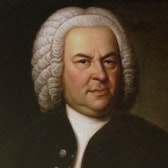
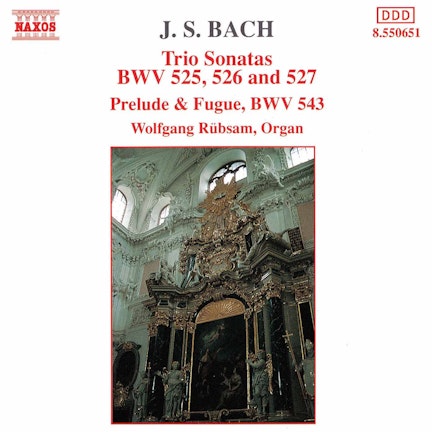
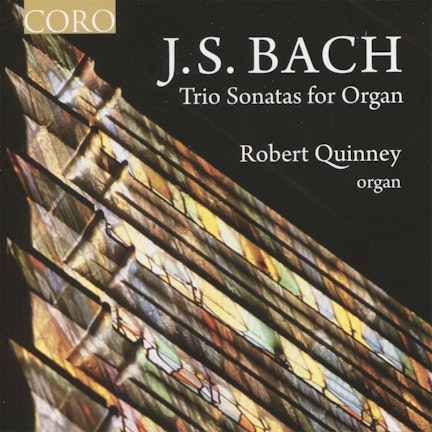
Bach's son, C. P. E. Bach, asserted that the trios 'are written in such galant style that they still sound very good, and never grow old, but on the contrary will outlive all revolutions of fashion in music.'
Recording & Production
The recording of the Prelude and Fugue in E-flat Major (BWV 552) had to be re-recorded in 2014 due to 'shaky wind' in the organ's winding system during the initial 2011 sessions.
Compositional Technique
Bach's organ trios revolutionized the genre by requiring the organist to use all four limbs, with each hand on a separate keyboard for distinct sounds and the feet playing the bass line.
Composition History
The Six Trio Sonatas (BWV 525-530) were composed by Bach for his eldest son, Wilhelm Friedemann Bach, to help him prepare to become a great organ performer.
Instruments
The Cornell organ, used for this recording, is based on the famed organ Arp Schnitger finished in 1706 for the chapel of Charlottenburg Castle in Berlin, which was destroyed during World War II.
Recording & Production
During the recording sessions, university maintenance chose the same nights to clear the sewer on the block, filling the chapel with a 'cosmic hum' and stealing prime hours of silence.
Composer Biography
Bach's contemporaries and students praised his speed and accuracy on the organ pedals, with his obituary noting he could play things with his feet that many clavier players struggled with using five fingers.