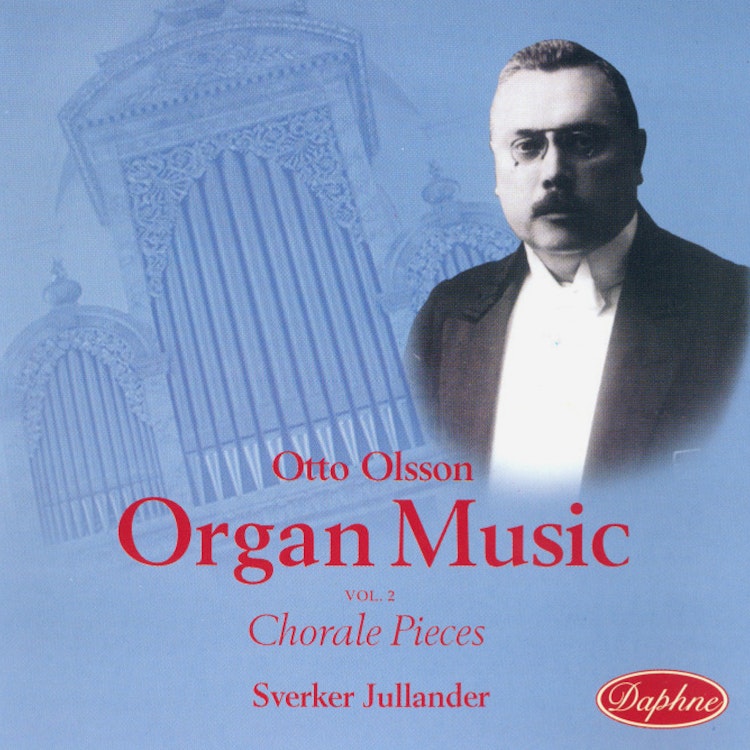
Olsson's collection of twelve organ pieces, originally titled 'Twelve Introit Preludes' in 1908, was unpublished for years and later released under a new, less specific title in 1936 due to changing church music ideals.
Composer Biography
Olsson was a prolific composer, organist at Gustav Vasa Church in Stockholm, and later a professor of organ at the Conservatory, describing himself as a "miniature archbishop for church music."
Compositional Technique
The 'Twelve Organ Pieces on Chorale Motives' generally function as fantasies, treating one or more phrases of a hymn, with the exception of 'New Year' which presents the entire chorale, and 'Good Friday' which lacks chorale motives entirely.
Instruments
The main organ in Kristinehamn Church, built in 1921, is typical of the late Romantic Swedish tradition, featuring many soft stops and lacking repeating mixtures, a design approved by Otto Olsson himself.
Interpretation
Recordings of Otto Olsson playing two of these pieces show extreme tempo fluctuations and extended crescendos not indicated in the score, reflecting the performance style of late Romantic organists.
Composer Biography
Otto Olsson, the composer, developed a fascination with the organ at an early age, attending church services with his deeply religious mother.
Compositional Technique
In his Fantasy and Fugue, Olsson used a strict diatonic harmonic language, playing only on the 'white' keys of the keyboard (except for the final measures), to retain the Phrygian modal character of the pre-Reformation hymn.
You might also enjoy...
Symphonie Romane
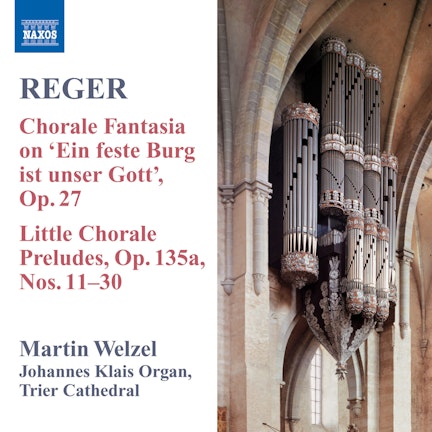
Max Reger: 7 Choralfantasien
Vägen till livet
Reger: Chorale Fantasias
Mussorgsky: Obrazki z wystawy - Liszt: Ad nos, ad salutarem undam
Vierne: Carillon de Westminster / Widor: Symphony No. 5
Liszt - The Organ Composer
Elements of Bach
Reger: Organ Works, Vol. 5
Saint-Saëns: Organ Works, Vols. 2 & 3
Reger, M.: Organ Works, Vol. 8
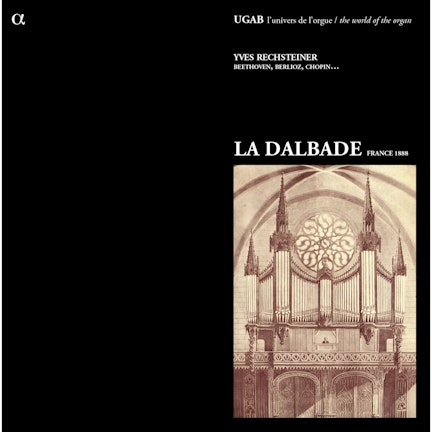
Beethoven, Berlioz, Chopin… La Dalbade, France 1888