Kolberg's family moved to Warsaw in 1819, where his father became a professor, placing Oskar in the center of intellectual life and exposing him to figures like Fryderyk Chopin.
Composer Biography
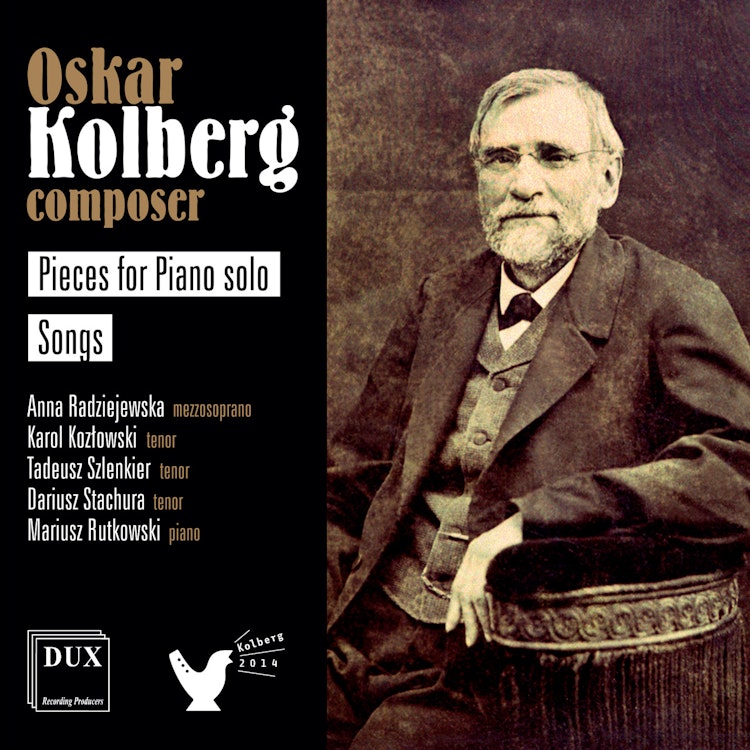
Oskar Kolberg, the composer, was born in Przysucha, Poland, on February 22, 1814, and studied music with Józef Elsner and others.
Composition History
Kolberg began systematically collecting folk melodies around 1839, initially near Warsaw, and later expanding his research to other regions.
Cultural Impact
Oskar Kolberg's ethnographic collection was initially valued more than his compositional output, which is considered part of 'forgotten Romanticism'.
Recording & Production
This album was recorded in August 2014 at The Krzysztof Penderecki European Center for Music in Lusławice.
Composer's Artistic Vision
Oskar Kolberg dedicated his life to documenting Polish folk culture, creating a monumental multi-volume work titled 'Lud. Jego zwyczaje, sposób życia, mowa, podania, przysłowia, obrzędy, gusła, zabawy, pieśni, muzyka i tańce'.
Critical Reception
Józef Sikorski, a contemporary critic, noted Chopin's influence on Kolberg's piano works, particularly the use of melismatic notes and the attempt to enclose musical thoughts in a tight form.