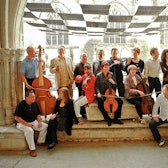
The recording venue, a 19th-century building with three open storeys, was chosen for its acoustic properties, which enhanced the Renaissance works.
Compositional Technique
Ashewell's Missa 'Ave Maria' showcases a complex, typically English 'flamboyant Gothic' contrapuntal texture, including the use of 'false relations' (different accidentals for the same note in two voices).
Composer Biography
Thomas Ashewell, a precursor to Palestrina and Lassus, was a versatile musician who taught plainchant, polyphony, faburden, discant, organ, and 'countre' at Durham Cathedral.
Composer's Artistic Vision
Palestrina's style, working in Rome under the Vatican, was characterized by classical counterpoint, a transparent language, and a pure a cappella style, reflecting the Catholic Church's doctrines.
Compositional Technique
Lassus's mass on this album is a 'parody mass,' a 16th-century technique where a pre-existing work, in this case Nicolas Gombert's chanson "Tous les regretz," forms the basis for a new composition.
Composer's Artistic Vision
Lassus, employed at the Bavarian court in Munich, embraced a more 'terrestrial' art with a preference for profane magnificence and exuberant polyphony, even in sacred works.
Album & Artwork
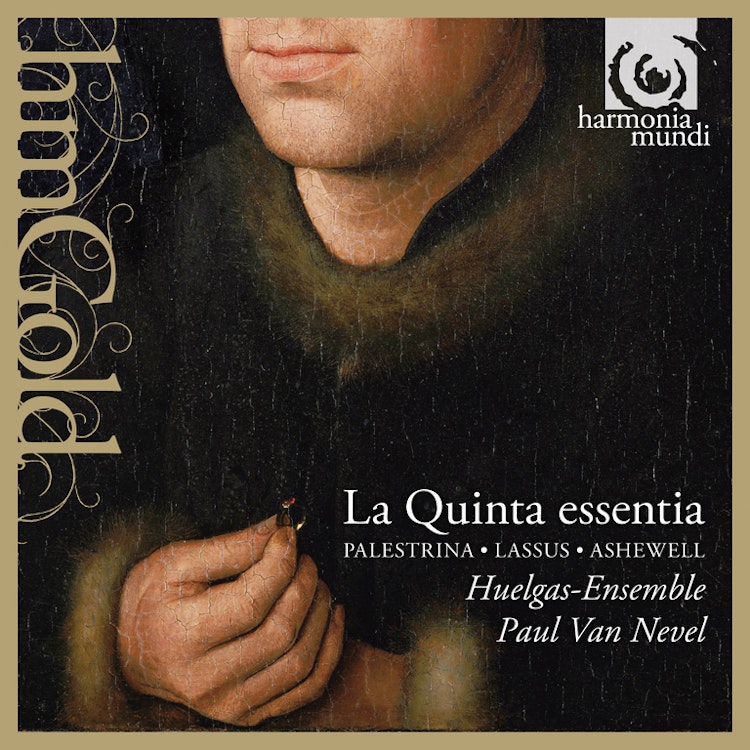
The album's title, "La Quinta essentia," comes from the Museum of Water in Lisbon, where the recording took place.
You might also enjoy...
Padovano: Messe à 24 voix
Palestrina: Missa Papae Marcelli
Ockeghem: Missa Fors seulement
Isaac: Missa Paschale
I. Kyrie
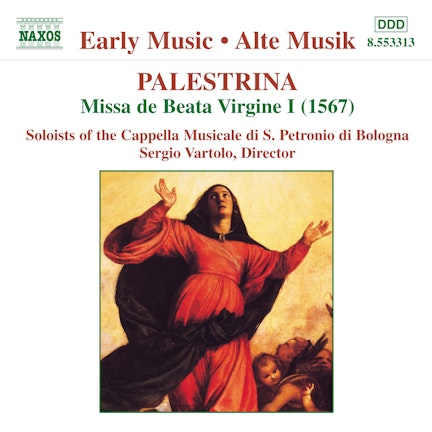
Palestrina: Missa De Beata Virgine
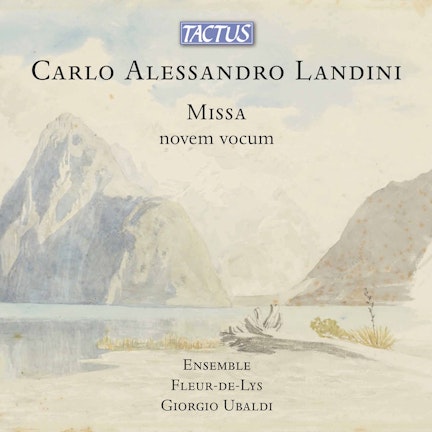
Landini: Missa novem vocum
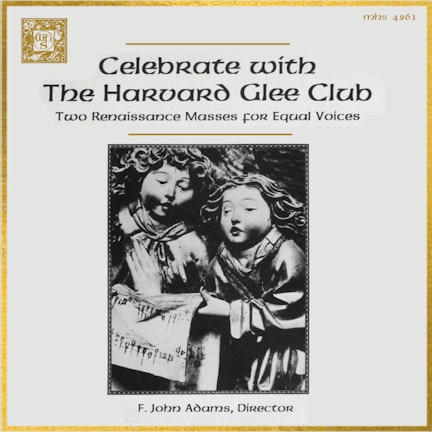
Celebrate With The Harvard Glee Club: Two Renaissance Masses For Equal Voices
Tye Masses (Euge Bone & Western Wind)
Ludwig Daser: Polyphonic Masses
Morales: Missa pro defunctis a 5 "Requiem": II. Kyrie
Agricola: Missa Malheur Me Bat / Missa In Minen Zin