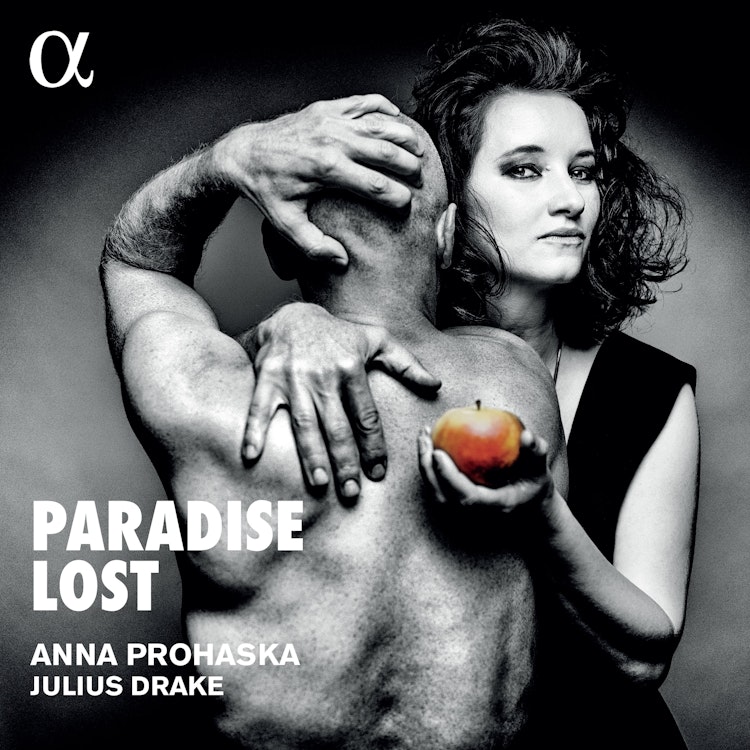
The myth of Adam and Eve, described by literary scholar Stephen Greenblatt as humanity's most powerful myth, inspired the program of songs on this album.
Compositional Technique
Composer Olivier Messiaen's works featured on this album include onomatopoeic birdcall imitations, showcasing his attraction to depicting nature in music.
Interpretation
Soprano Anna Prohaska and pianist Julius Drake initially intended to create a recital program about antiquity, focusing on Arcadia and the Garden of the Hesperides.
Historical Context
America plays an important role in this program through composers like Charles Ives, Leonard Bernstein, and George Crumb, as well as European emigrants Bertolt Brecht and Hanns Eisler, reflecting the idea of the U.S. as a new beginning.
Album & Artwork
The album's title, "Paradise Lost," is shared with John Milton's epic poem, which plays a significant role in the literary study that inspired this program.
Composer's Artistic Vision
The album's program explores the 'Janus-faced' stereotype attributed to women, a concept that particularly appealed to the artists Anna Prohaska and Julius Drake.