The Concert Spirituel, founded in Paris in 1725, was the first European institution to offer concerts where the audience paid to hear music, similar to modern concerts.
Compositional Technique
J. S. Bach, among others, adapted Pergolesi's Stabat Mater into a German motet titled Tilge, Höchster, meine Sünden (BWV 1083).
Critical Reception
Jean-Jacques Rousseau, a prominent philosopher, called the first movement of Pergolesi's Stabat Mater 'the most perfect and touching that has ever come from the pen of any composer'.
Recording & Production
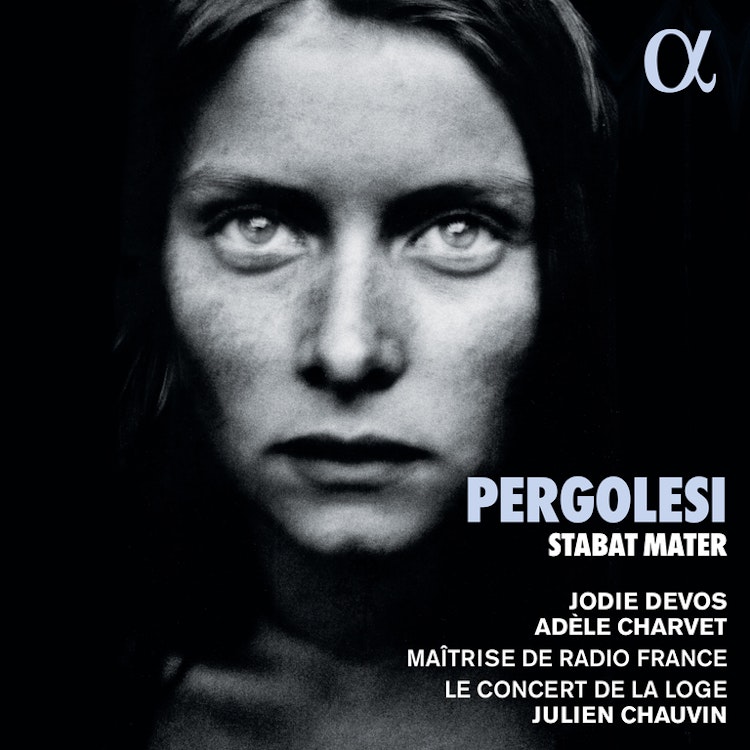
This recording was inspired by the discovery of two manuscript copies and a printed edition from 1763 of Pergolesi's Stabat Mater, found in the Bibliothèque Nationale de France in Paris.
Cultural Impact
Pergolesi's Stabat Mater was the most widely performed work in the 18th century and was considered a masterpiece of sacred music across Europe.
Interpretation
The performers on this album chose to use the historical Parisian pronunciation of Latin from the mid-18th century, which is distinctively French.
Composition History
Pergolesi's Stabat Mater was composed in 1736 and premiered at the Concert Spirituel in Paris in 1753, where it was performed annually until 1790.