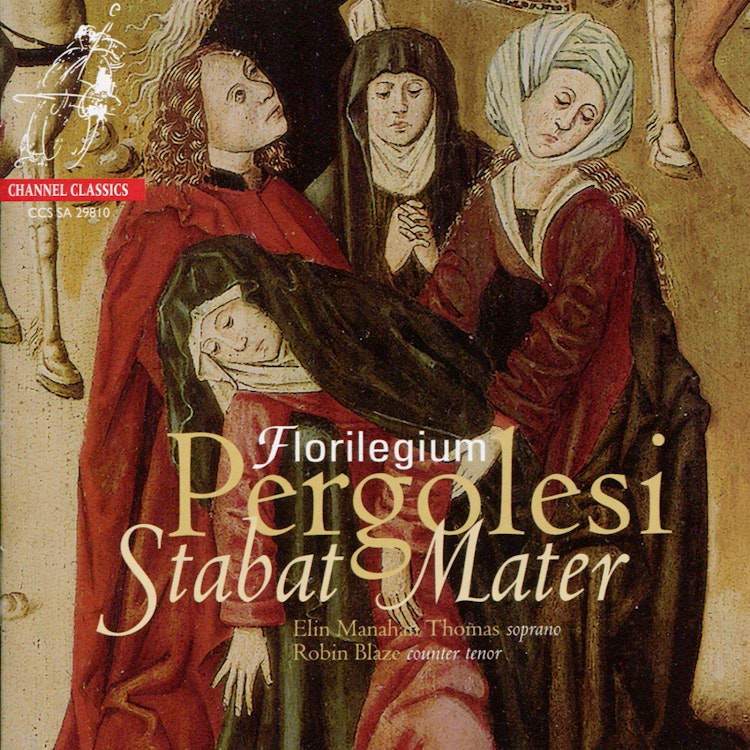
Pergolesi: Stabat Mater, Salve Regina - Florilegium
5/1/2010, 24 Tracks, 1:12:34
Featuring
Elin Manahan Thomas
Robin Blaze
Ashley Solomon
Jennifer Morsches
Florilegium
Giovanni Battista Pergolesi
Did you know?
1/7
Critical Reception
After Pergolesi's death, his Stabat Mater became one of the most widely disseminated and frequently printed manuscripts of the 18th century.
Cultural Impact
Johann Sebastian Bach created a tribute to Pergolesi's Stabat Mater in the form of a musical parody, his German setting of Psalm 51 (Tilge, Höchster, meine Sünden).
Critical Reception
Despite limited fame during his lifetime, Pergolesi's reputation eclipsed most other composers in the second half of the 18th century, with all of Italy eager to hear his works after his death.
Composition History
Pergolesi composed his Stabat Mater and Salve Regina in a Franciscan monastery in Pozzuoli, seeking respite from tuberculosis before his premature death in 1736.
Composer Biography
Giovanni Battista Pergolesi, born in 1710, lived near Naples and received his early musical training at the Conservatorio dei Poveri di Gesù Cristo.
Composition History
Pergolesi's Stabat Mater was likely commissioned by Domenico Marzio Caraffa, the Duke of Maddaloni, to replace an older setting by Neapolitan composer Alessandro Scarlatti.
Cultural Impact
Igor Stravinsky's 1920 ballet Pulcinella, created for the Ballets Russes, was based on manuscripts he believed to be entirely by Pergolesi, re-orchestrating the Presto for trombone and double bass solos.
You might also enjoy...
While Shepherds Watched: Christmas Music from Parish Churches (English Orpheus 40)
Scarlatti & Dvořák: Stabat Mater
Nativity: Christmas Music from Georgian England (English Orpheus 49)
Hasse: Sacred Works
Cardoso: Missa Miserere mihi Domine
Abbado: Mussorgsky – Pergolesi
Herrnhuter Weihnachten (Moravian Christmas)
Marian Songs of the Middle Ages
Psalms
Pergolesi: Stabat Mater; Salve Regina in F minor; Salve Regina in A minor